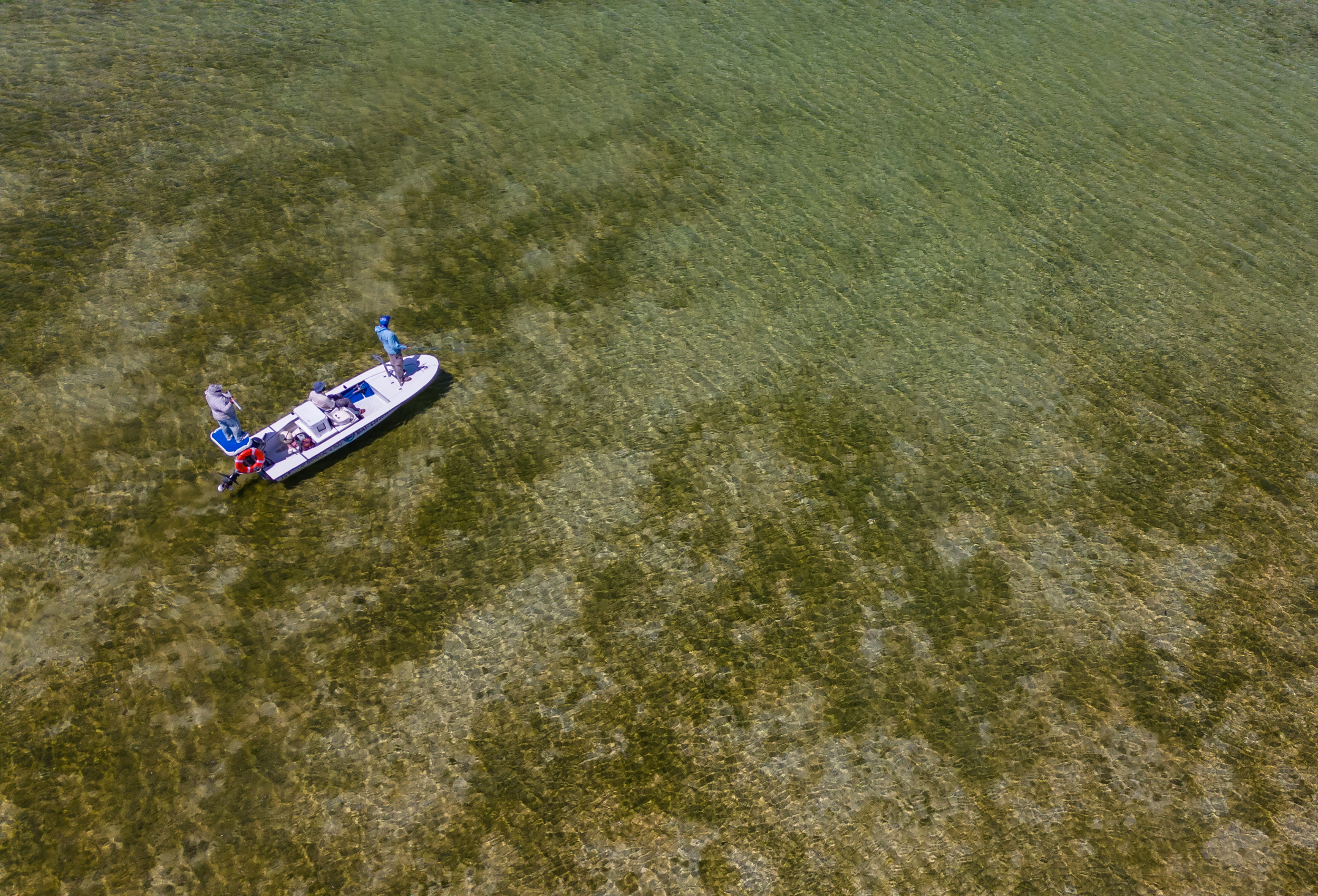
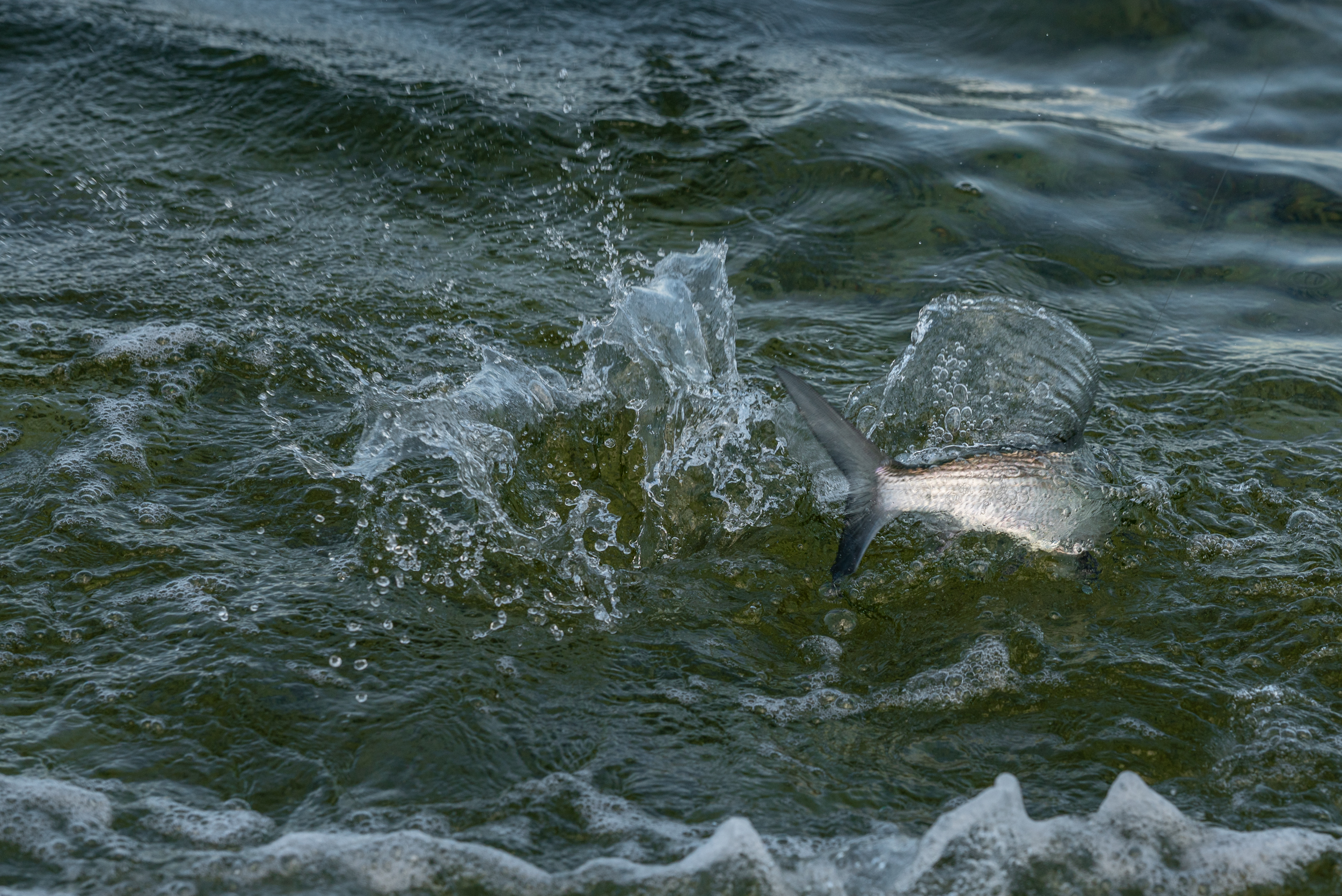
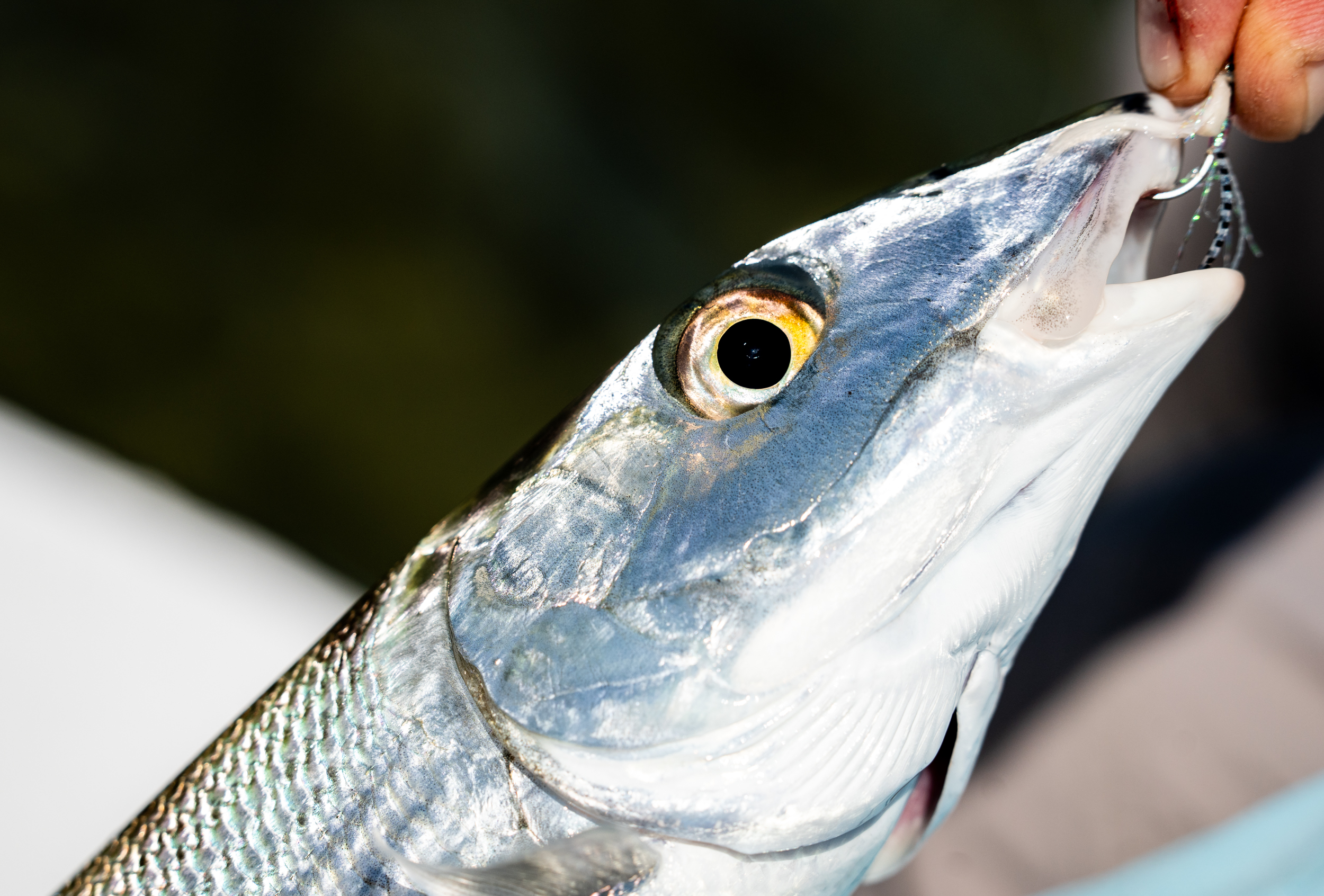
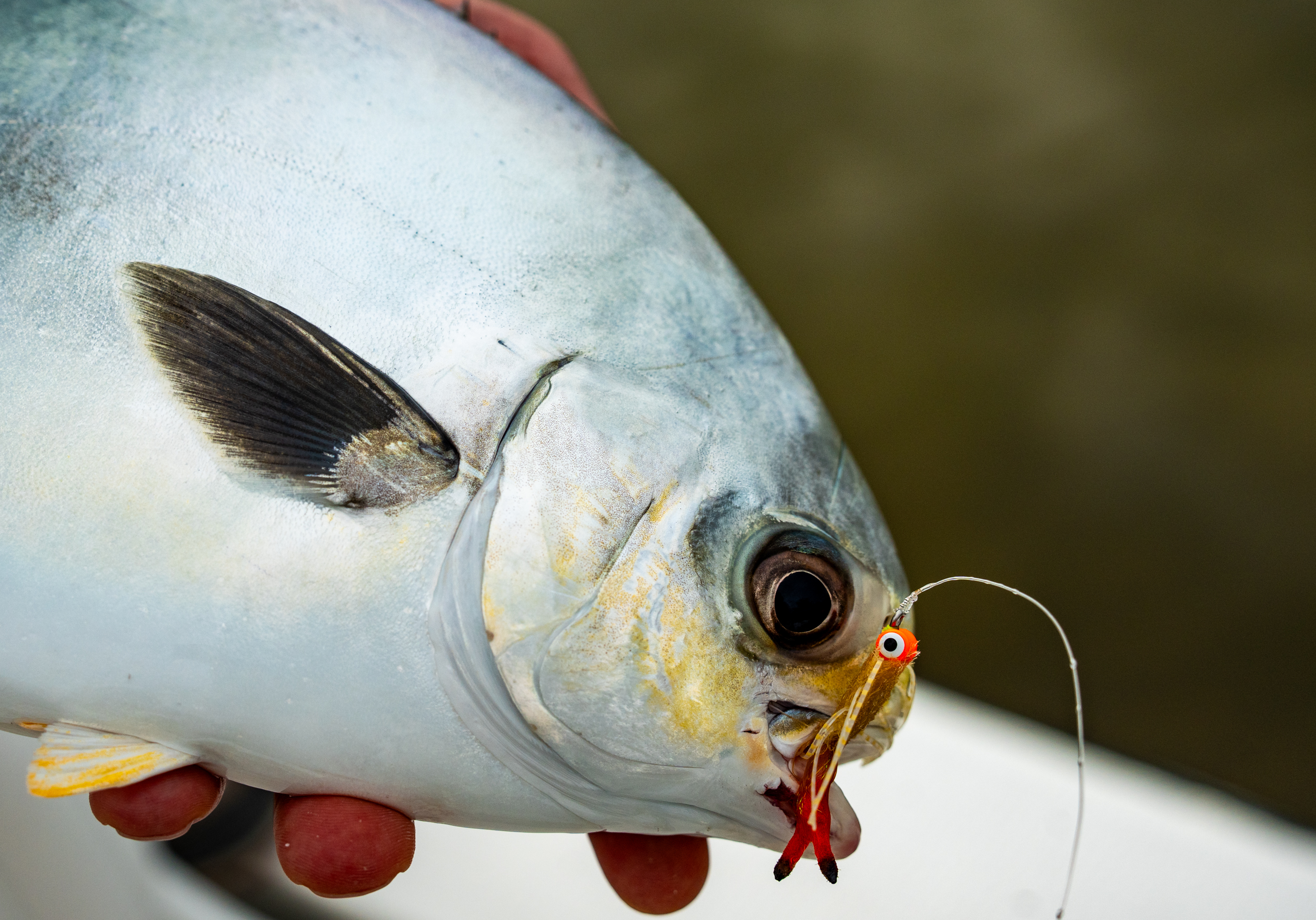
For the permit of the Yucatan, finding something positive in the mats of prop-fouling weeds isn’t hard at all. In fact, they actively look for it, find it, and eat it often.
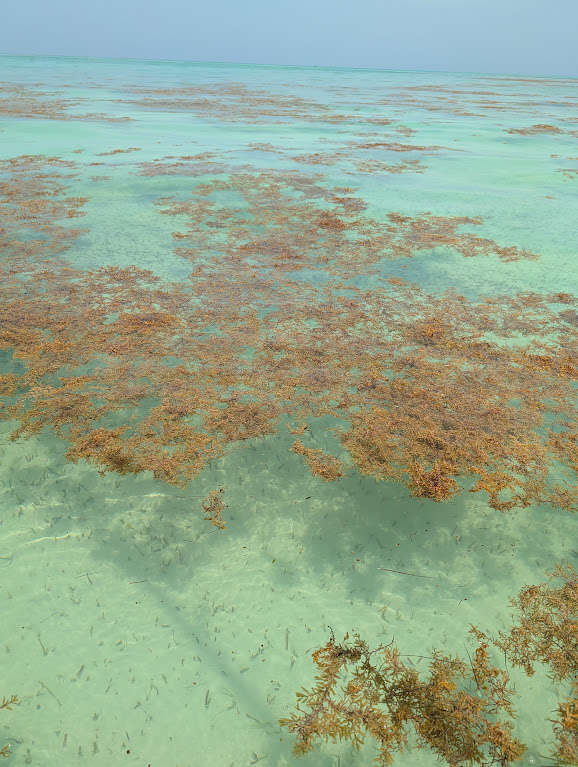
Like a trendy new restaurant coming to town, the permit can’t get enough of the fresh, abundant eats: Portunus sayi — the sargassum swimming crab. This small pelagic crab inhabits and hunts the weed mats as they drift around the Caribbean. The sargassum provides a mobile, shaded ecosystem rich with life, including small fish, sea worms, and shrimp.
The local permit learned that these mats are transient buffets loaded with crabs — arguably their favorite food — and it didn’t take them long to figure out how to exploit them. Because the crabs float and swim around the weed edges, the permit learned to gently rise and sip them off the surface, not unlike, well… you know what.
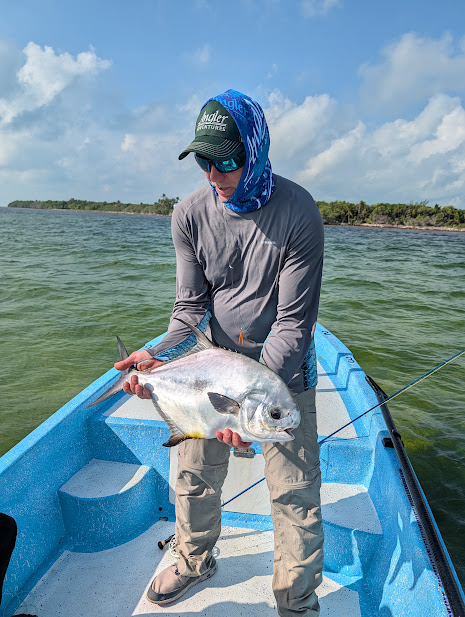
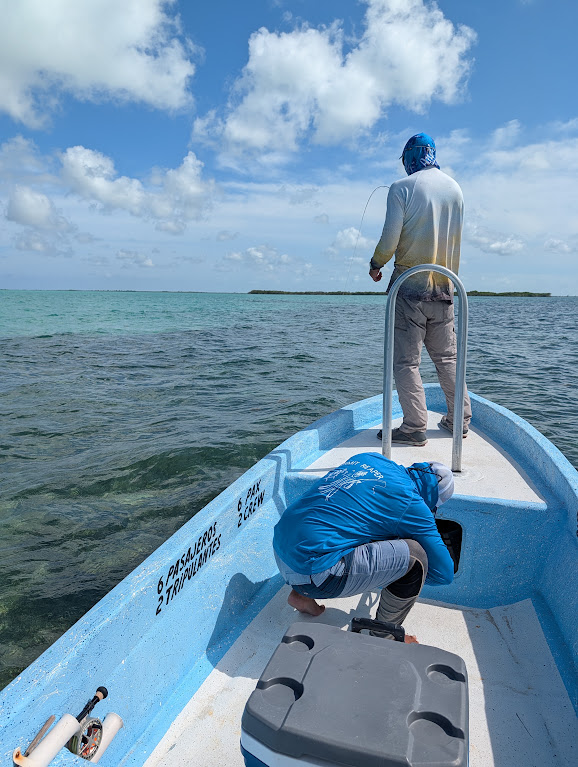
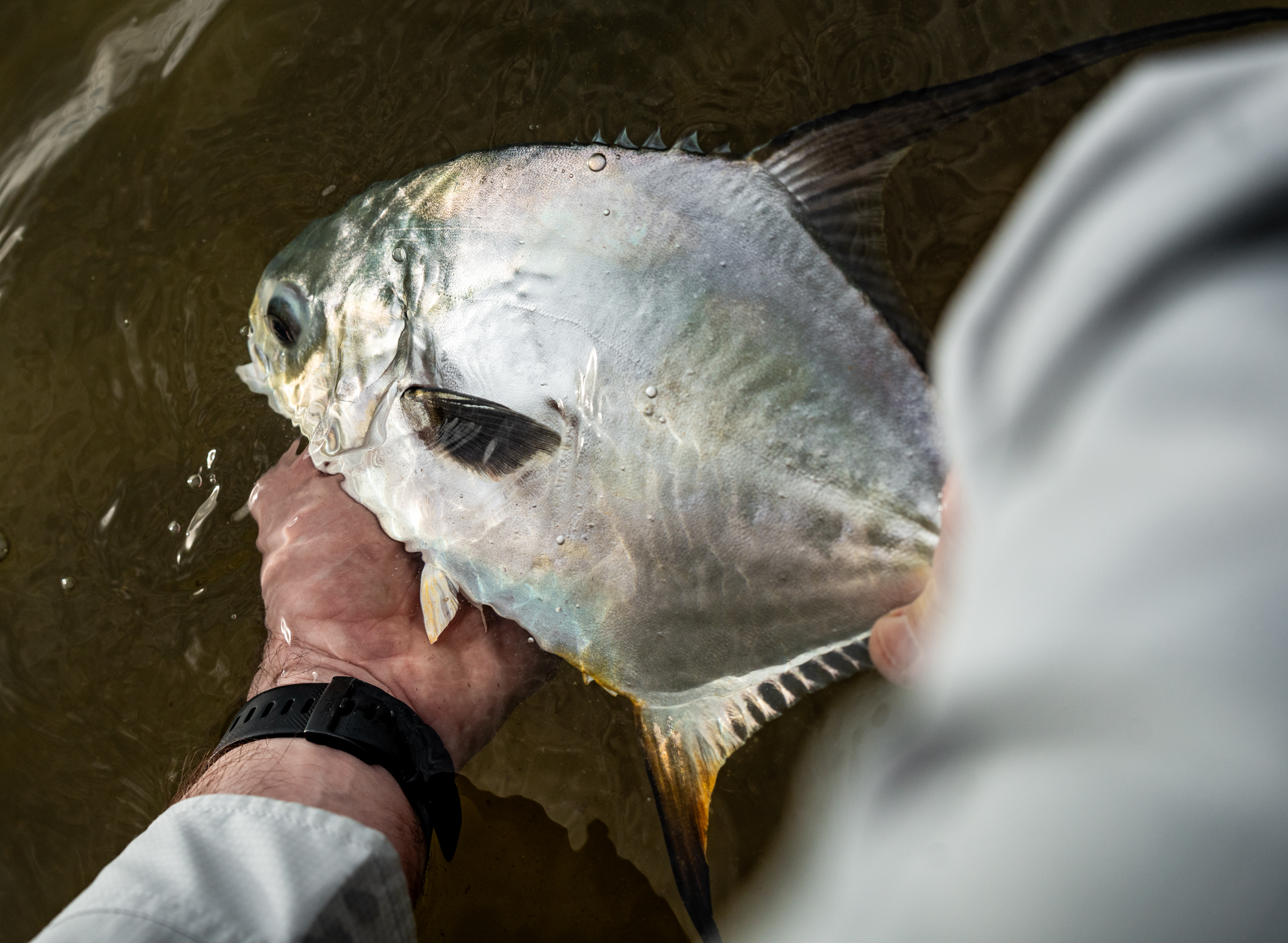
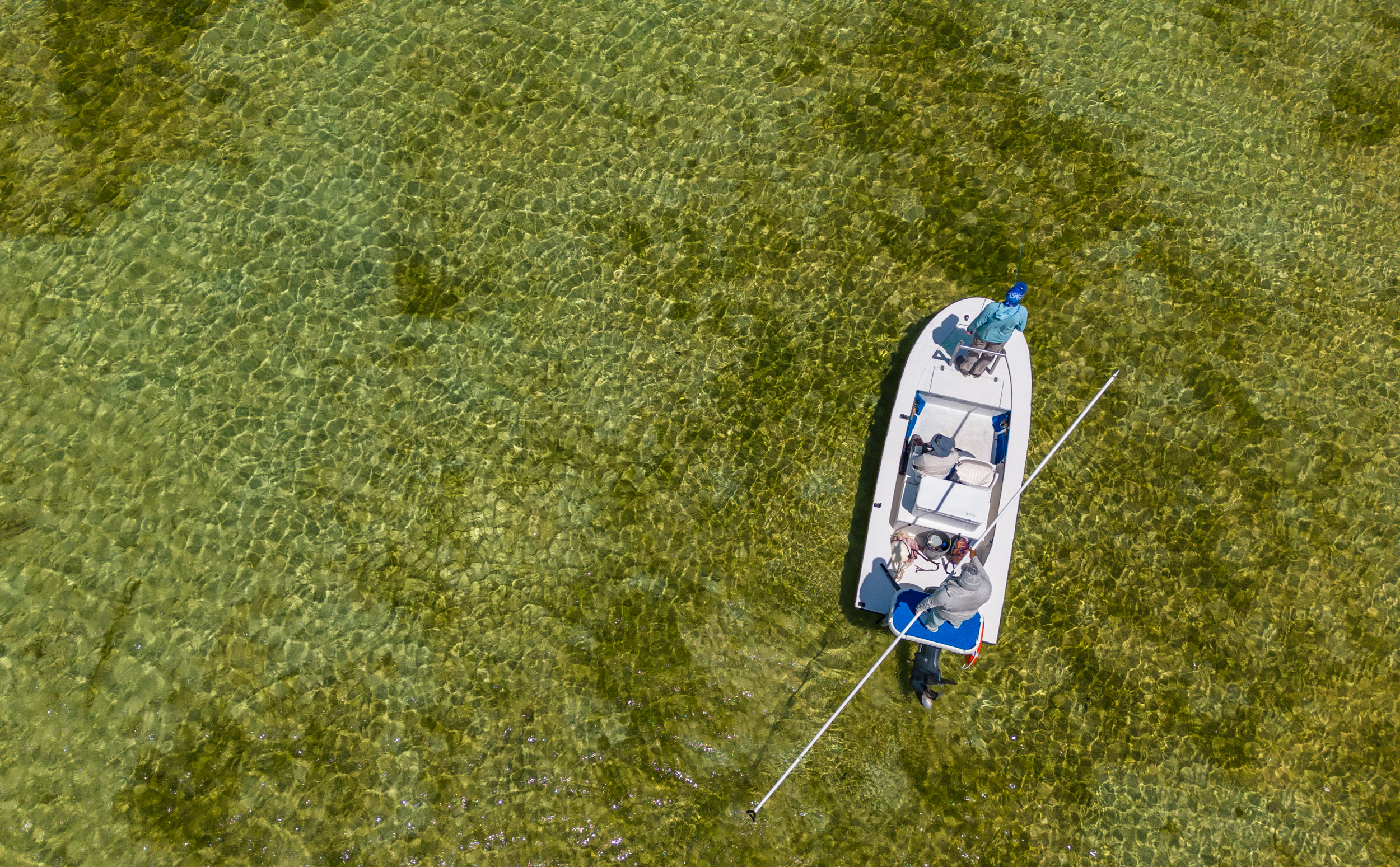
For us fly fishers, this means we can target permit dry-fly style. I didn’t really believe it either, not even when my Mayazul guide insisted I tie on his custom, unweighted crab pattern. Time stood still when a nice permit turned toward my floating crab’s waking action, briefly sized it up on the pause, and created a small hole on the ocean’s surface before audibly sucking it down. After I released my permit and some high-fives, my guide said it:
That’s the 8th permit this week on that fly.
02 Mayazul · 24 Aug 2026.
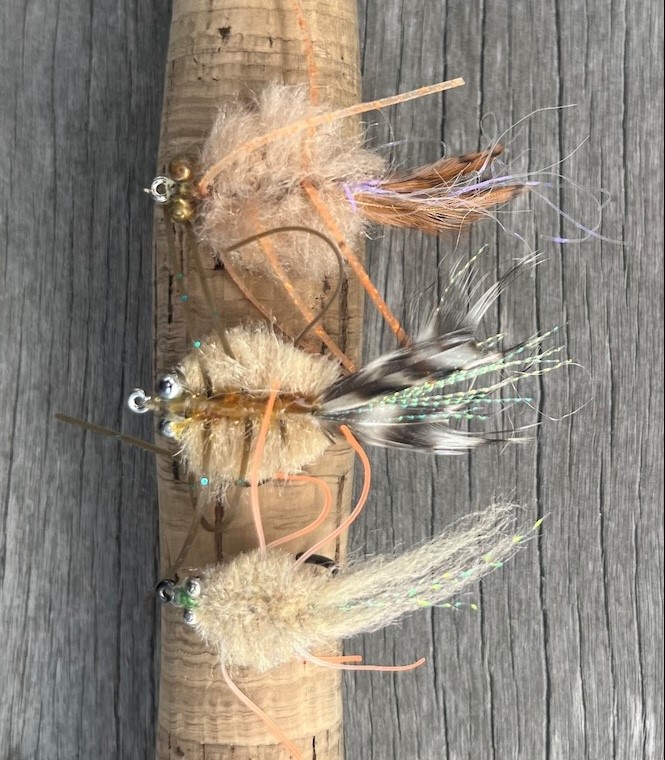
03 From the crab-fly piece. Heavy brass eyes on the top fly, small bead chain on the bottom. The Mayazul pattern was lighter still: unweighted, and fished on the surface.
While the sargassum is quite unsightly heaped up along the jungle beaches, seeing a permit eat a crab fly on the surface is perfect and beautiful, and unforgettable. I’ll be bringing a box of floating crab patterns on my next trip to Mexico, and remembering the sargassum isn’t all bad.
04 Pesca Maya · 26 Aug 2026.
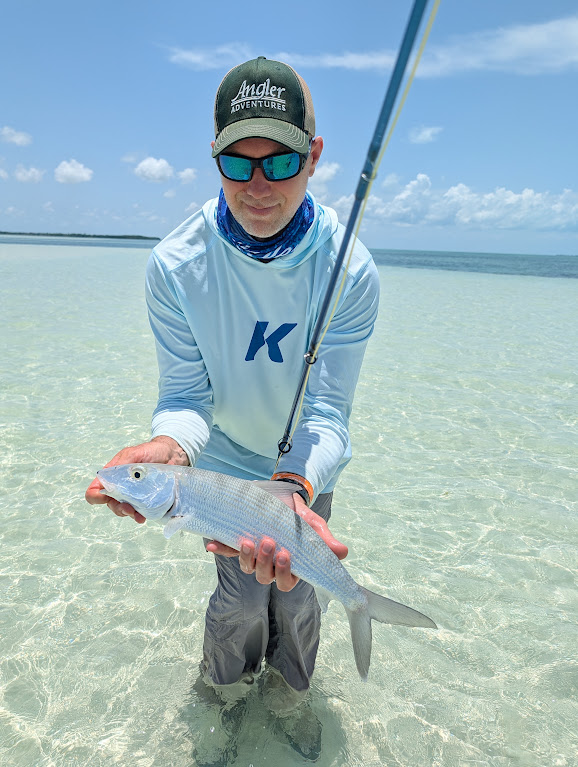
05 Sian Ka’an · 27 Aug 2026. Liam Rosati with a bonefish.
Angler Adventures’ Liam Rosati scored a traditional fly-fishing inshore super grand slam earlier this spring on a short four-day tour of Playa Blanca Lodge. Permit. Tarpon. Bonefish. Snook.
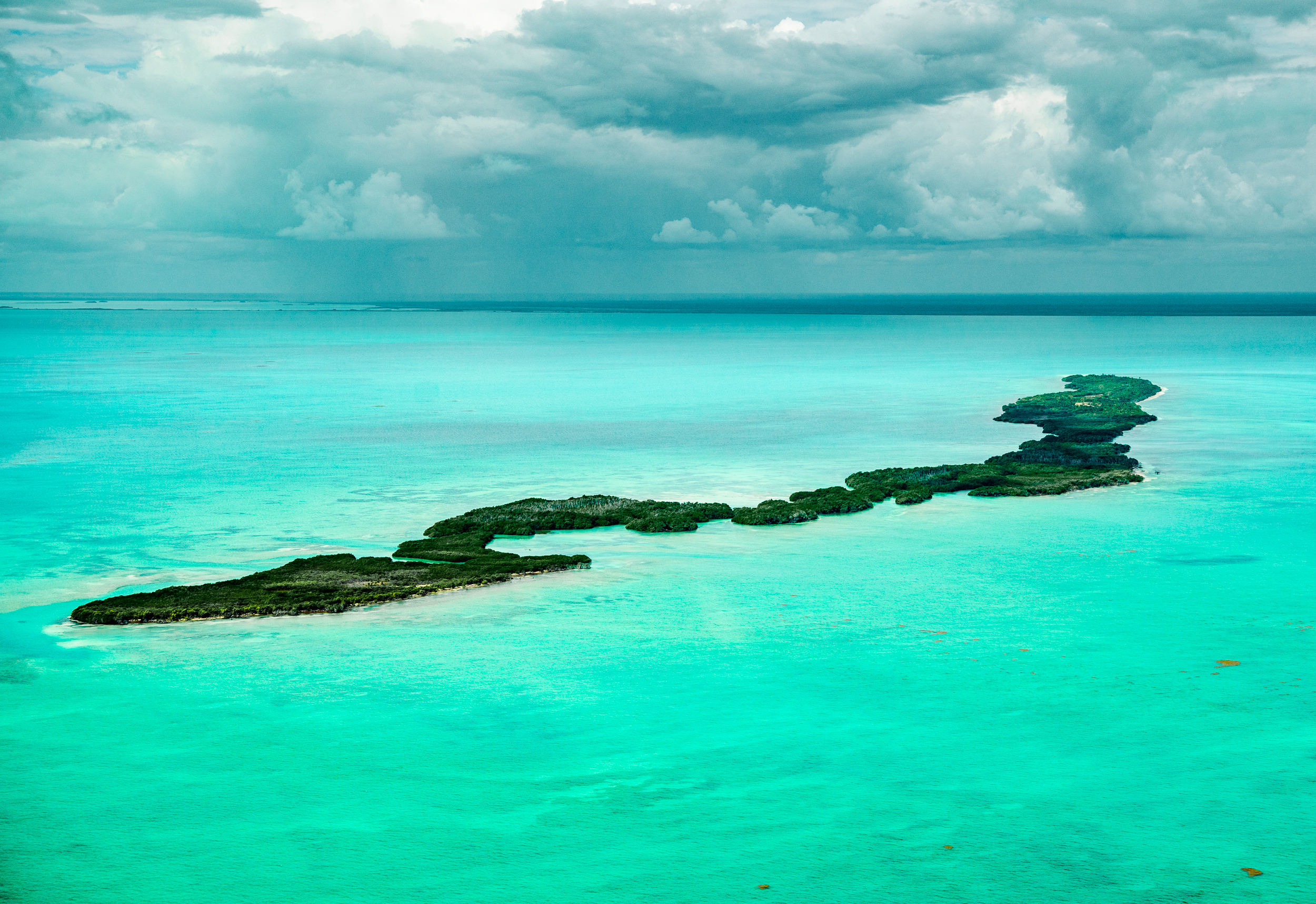
The lightly fished waters of Espiritu Santo Bay—coveted by permit anglers and adventurous mixed-bag anglers alike—need little introduction. Playa Blanca has been a premier fly-fishing destination with a long waiting list for decades. We had an opening at the lodge and sent Liam down to see how the operation runs and to experience the fishery firsthand.
Heavy trade winds lashed the bay on Liam’s first morning and made sight fishing virtually impossible for much of the day. His guide still shouted “Permit!” more than once, but Liam could not see the fish or deliver an accurate cast. Despite the difficult conditions, the mood back at the lodge stayed infectiously optimistic—other anglers were connecting with permit, bonefish, and tarpon in different areas of the bay.
When the wind eased the next day, Liam’s guide said, “Yesterday was tough. Today let’s start by stretching your line on some bonefish.” And they did. Most of the bones ran one to two pounds—what they lacked in size they made up for in numbers. The bay’s bonefish are especially light in color with mirror finishes and pink coral-colored fin tips, which makes them difficult to see even when nervous water gives them away. The hot fly was a sparsely tied spawning shrimp. After lunch they turned to permit hunting. Liam had several nice shots and a brief, heart-pounding follow, but did not convert an eater.
With sixteen hours of fishing time left on day three, Liam felt the pressure to connect with a permit. Southeast winds had picked up but were not quite as strong as on day one. The guide poled into a protected cove where the water lay shiny slick. They encountered a large shoal of happily tailing permit. After horsing in some aggressive jacks, Liam hooked a fish that shook the rod and changed directions several times before hunkering down under the skiff. Eventually he landed his permit—a small model by the bay’s standards, but a permit nonetheless.
Poling along the shore and scanning for larger tails, they came into a long spread of rolling tarpon. The hot fly was an olive-and-white streamer. After a few jumps and drops, Liam landed an acrobatic baby tarpon. After lunch they drifted down tide; the guide told him to put the spawning shrimp back on. A long cast into nervous water produced Liam’s grand-slam bonefish. They spent the rest of the afternoon looking for permit over deeper flats, buoyed by the slam, but did not see another.
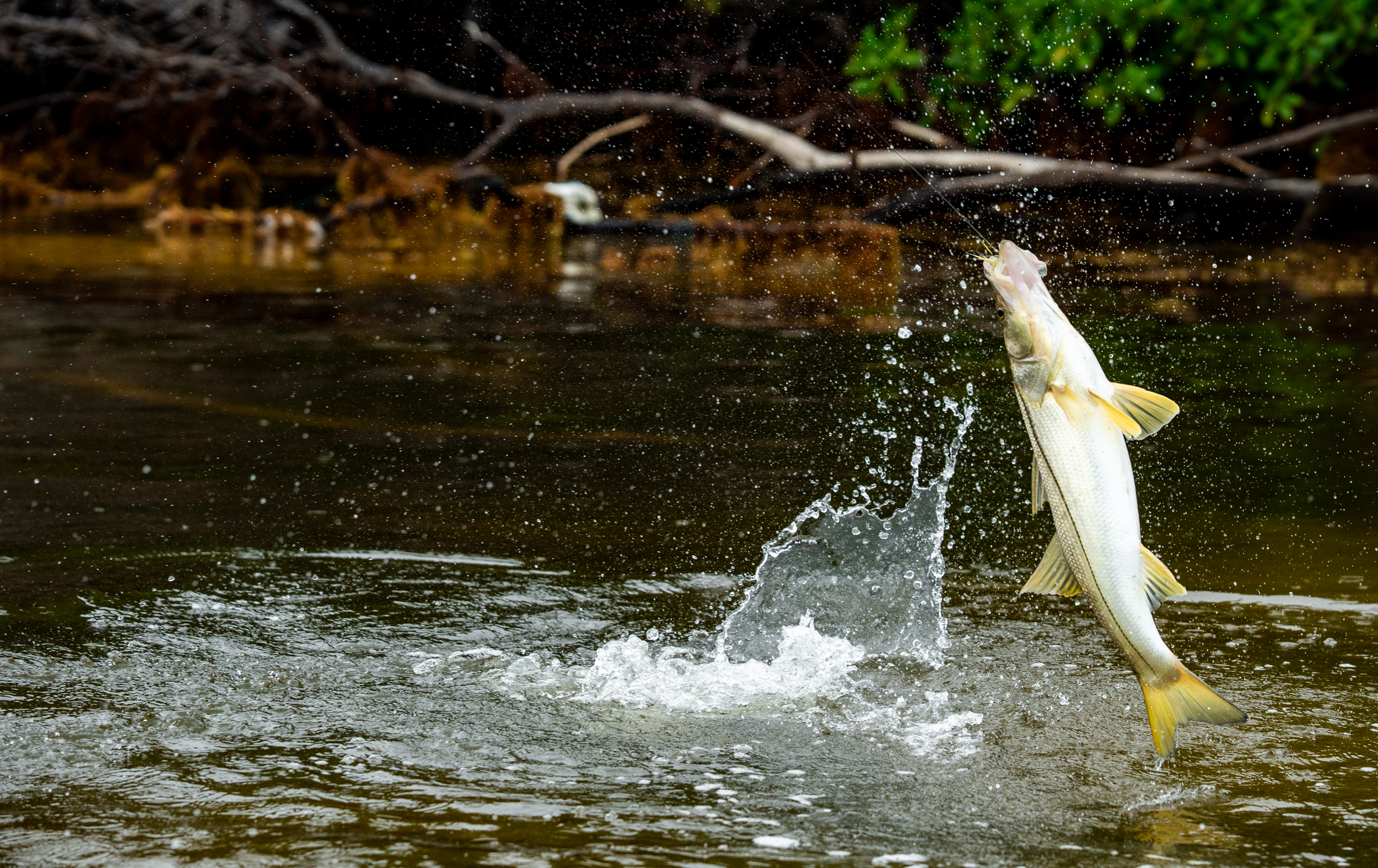
On the run back to the boat launch Liam asked about snook. The guide smiled and said, “Sí, Señor Liam,” and about fifteen minutes later they were along an island of old-growth mangroves—a rare sight in hurricane country. Liam cast and gently dropped his streamer between roots at the sight of a rusty gold shape moving against the tide. Without hesitation she turned and charged his Deceiver. After several stunning leaps and a match of tug-of-war, he boated his snook and added another feather to his guide’s cap (and his) for a super grand slam.
On his last fishing day Liam got to fish Tarpon Lagoon. They battened down the hatches and fixed the gear tight to the lagoon boat. Prone on the bow, he grabbed the mangroves and pulled the boat through an arboreal tunnel into the opening of the lagoon network. Crocodiles watched from a distance and roseate spoonbills stood fast on their favorite fishing spots. Standing on the bow, he had many ten- to twenty-pound tarpon chase down his streamer and go ballistic once the hook found purchase. He spent much of the day bowing to these silver princes. Many of the tarpon here have never felt the sting of a hook.
If you’d like to talk about Playa Blanca or are ready to make your next cast in the wilds of the Yucatan, please give Angler Adventures a call or shoot us an email.
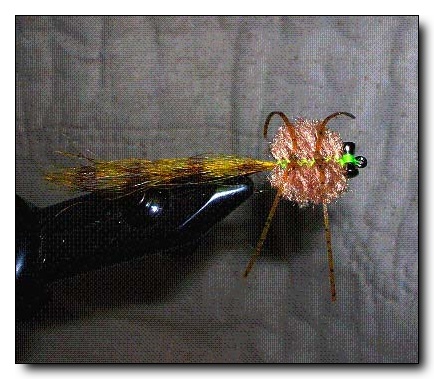
in quest of permit. The first day out, just a couple were taken, one by first time permit fisher Dr. Ralph Cifaldi. Ralph was using a crab pattern of his own concoction; a variation on the Dorsey Kwan, distinguished by a long tail of amber dyed polar bear barred with a brown marking pen.
"Tara" with a nice Ascension Bay Permit
The second day, there was better success in the group, with Ralph coming in as top rod with a “hat trick” – 3 more permit on this just his second day chasing permit! This piqued our interest a bit more in Ralphy’s unorthodox pattern.
The third day, more permit were released by the group, but again the top rod was Doc Ralph, with another hat trick! 3 days into the trip and Ralphy had 7 permit under his belt. The excitement over Ralphy’s fly grew, and being the generous soul that he is, he stayed up late cranking out more of his crab patterns so as to present each one of us with one at breakfast.
There was no doubt in my mind what fly to tie on that morning! We ran back into the bay, inside of the tip of Vigia Grande. The wind had slightly clouded the water along the south side of the bay, and my superb guide Manuel (Tarantula) worked the edge between the cloudy and the clear water. Suddenly I spotted a huge permit working up tide toward us. I called to Manuel and he kicked the boat right, and with a couple of strong pushes on the pole put me in position to intercept the fish. I launched Ralph’s fly, it landed perfectly, I made a one-foot long strip and the big fish quivered, lunged forward and ate it. It immediately took off on a searing and what I expected to be a “reel-emptying” run. But about 70 yards out, it just stopped, and slowly pulled. I looked at the bottom and it was moving. Yes, now he was just leisurely towing the boat across the bay! This went on for 42 minutes until finally we got the fish close enough to tail it. But Manuel couldn’t get it over the gunnel! Finally, he went over the side in chest deep water to “wrassle” the beast into submission. We didn’t have a boga grip, but Manuel said his largest “bogaed” fish was 38 pounds, and allowed as how this guy was just about as big! We settled on 35 as an estimate.
By the end of the week, our party of 8 had tallied an amazing 35 permit on fly, and quite a few over 20 pounds. And Ralph’s pattern accounted for 17 of these, and the fly didn’t even a name. The last evening, our group sat around the palapa having beers and trying to come up with an appropriate name for Dr. Ralph’s (a gynecologist by the way) remarkable fly. Finally John Canavari burst out, “I’ve got it! The Gyno Crab”. And the name stuck. Google it!
I can’t swear there’s something special about the pattern – maybe it was just a case of a lot of happy permit eating well. But if any fly catches any permit, I want to have it in my arsenal! Hope this works as well for you.
Dr. Ralph Cifaldi’s Gyno Crab – Tied by Doug Schlink
Mid-Morning Permit Snack
Hook: Daiichi X452 or similar in #2 or #4 Thread: Danvilles Flat Wax, Fl. Green Weight: Lead Eyes – sized to water depth and hook size Tail: Appx 2 – 2 ½ inches, Polar bear, dyed golden orange (Rit golden yellow dye does it) and barred with a dark brown (*) marking pen Body: 8 pieces of Tan Aunt Lydia’s Rug Yarn (Antron) figure-eighted in (Merkin fashion) on top of hook shank, and trimmed to appx dime shape. Legs: 2 (**) Amber/flecked black Sili-Legs, square knotted in (Merkin style), trimmed slightly long (about 1 inch) and set with Krazy Glue (***)
* I didn’t have a dark brown pen, just dark umber. The barring should be darker – more contrasting. ** While conventional wisdom would dictate 3 legs (per side), Ralph contends permit can’t count, so this is tied true to his original pattern (which worked, so apparently they can’t count). *** I didn’t have any Krazy Glue handy – just used some head cement. Ralph put drops of Krazy Glue on the legs near the edges of the yarn body (and worked into the yarn slightly) to keep these sticking out at the appropriate angles.
< class="aligncenter" style="width:459px;height:122px;" border="0" cellpadding="0" width="496">