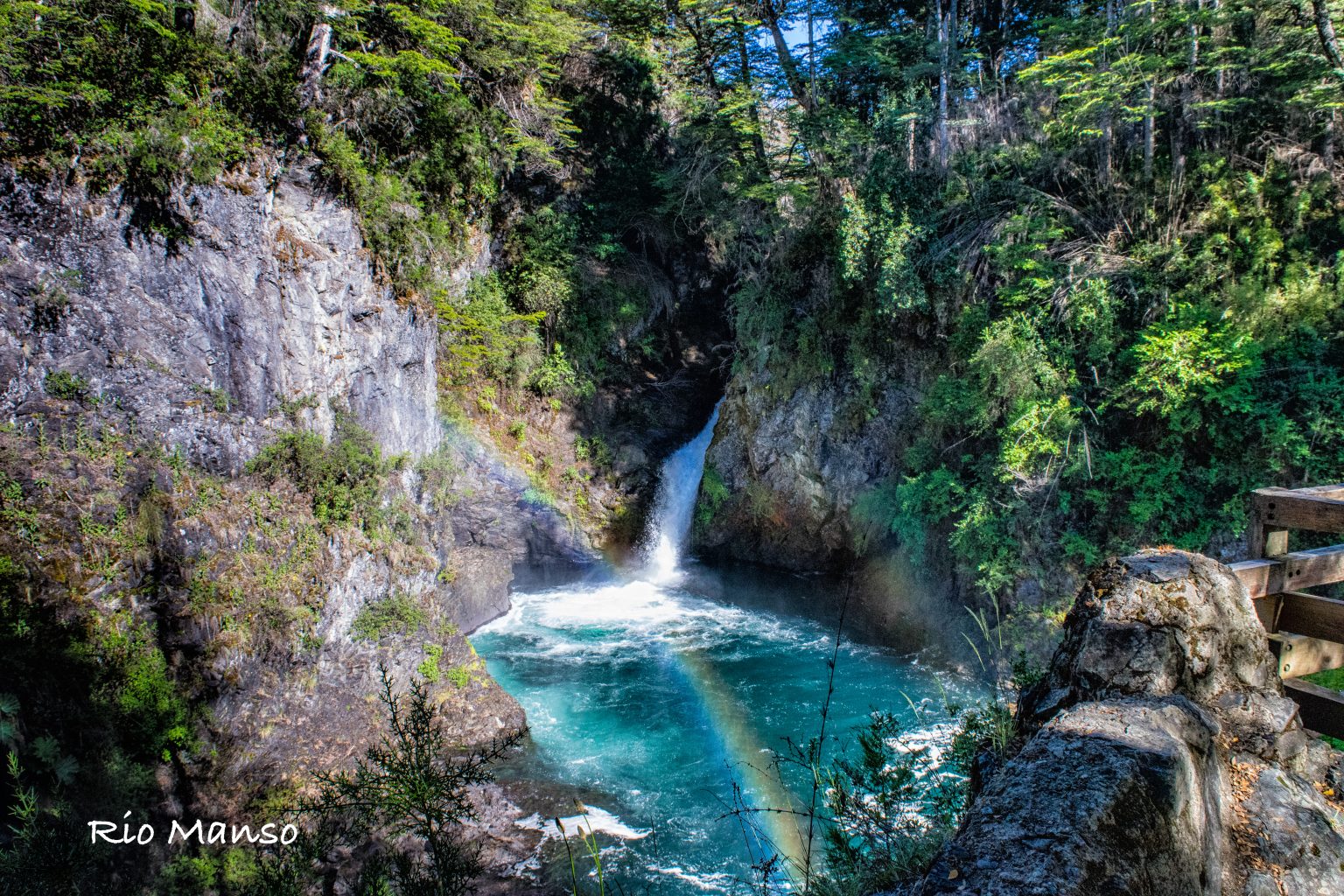
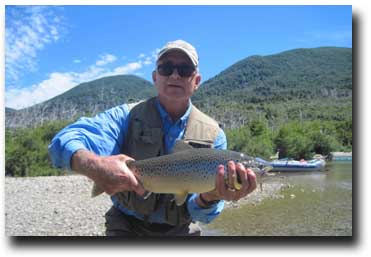
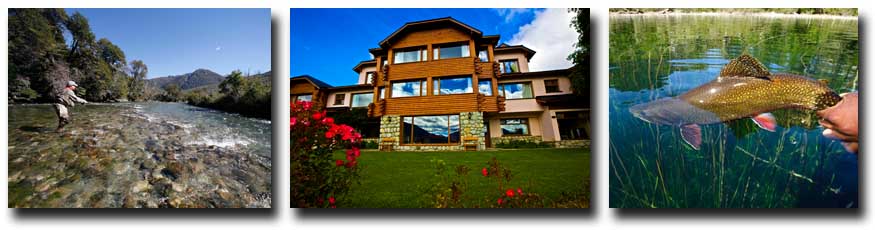
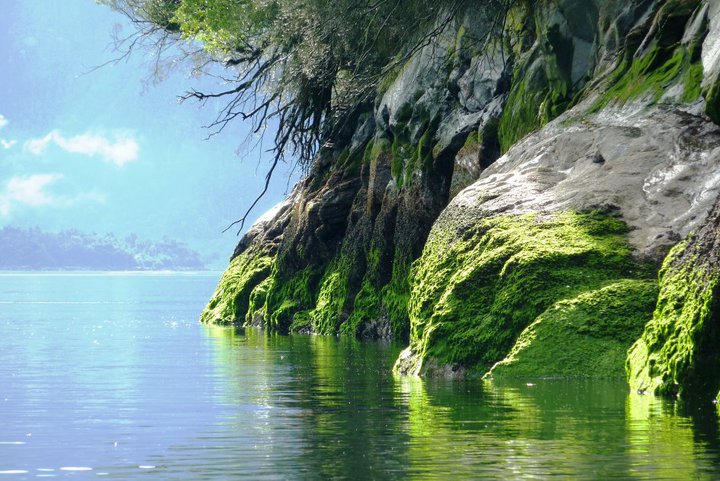
Rio Manso Lodge is located on the Eastern bank of Lake Hess and the Manso River in the Nahuel Huapi National Park (the first national park in Argentina), deep in the beautiful Patagonia region of Argentina. Rio Manso is only 90-minutes South West of the city of San Carlos de Bariloche. Despite being close to Bariloche, the Manso River gets little fishing pressure due to its inaccessibility.
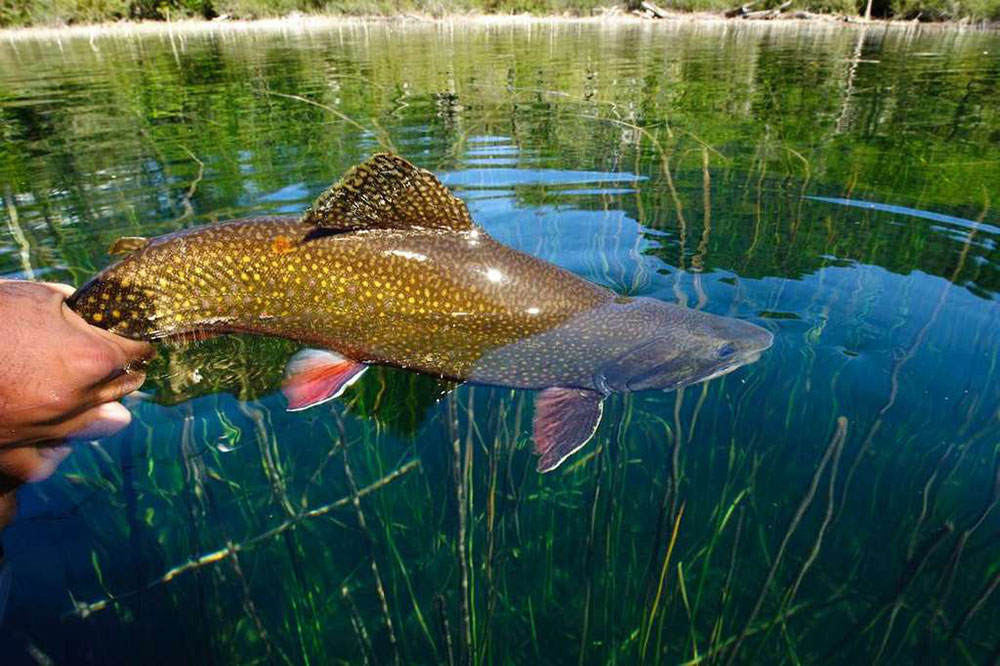
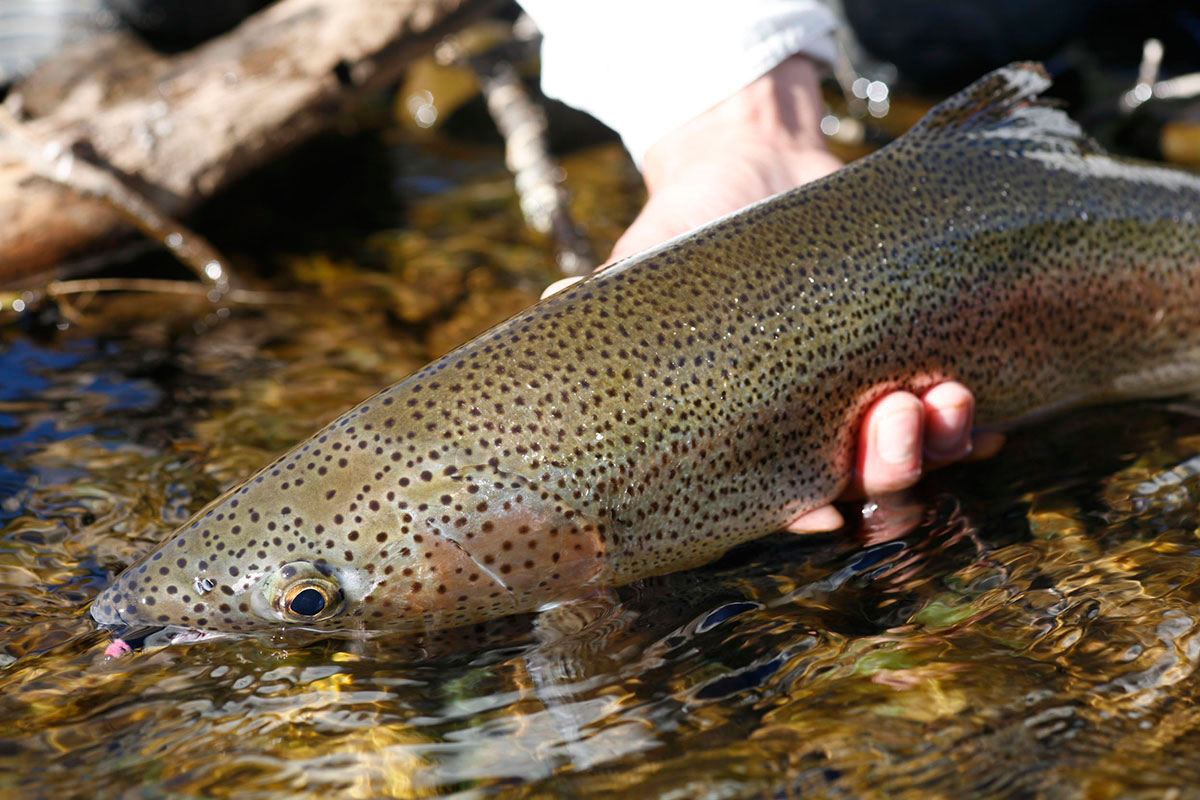
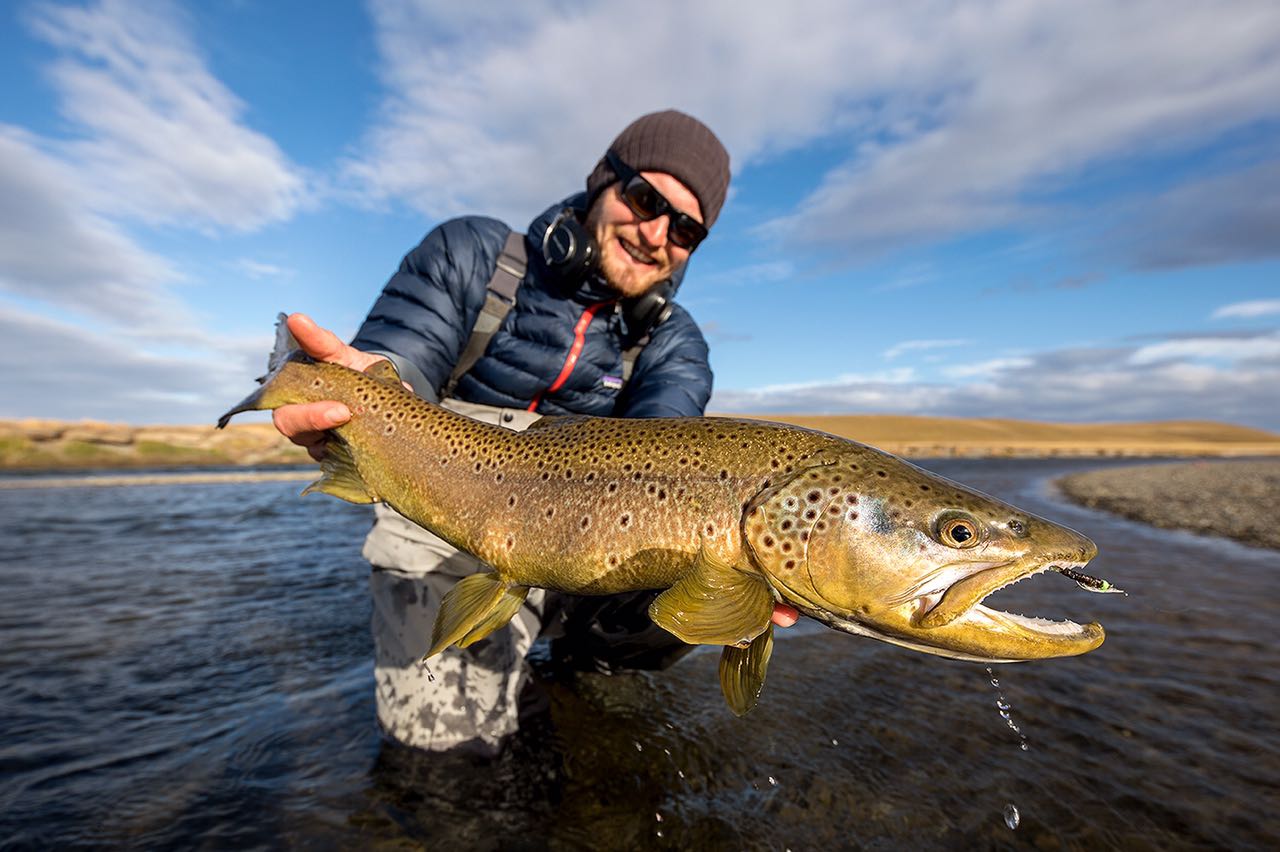
Rio Manso guests can expect good fishing for wild rainbow, brown and brook trout in the un-pressured and diverse water that surrounds the lodge. The remarkable quality and size of the trout is a result of the low pressure, conservation efforts, and Rio Manso Lodge’s strict catch-and-release policy.
Wild rainbow trout, brown trout, brook trout—all on dry flies, streamers, and nymphs
Season: Early November through end of April (peak dry fly: December-January, big browns: April)
Location: Nahuel Huapi National Park, 90 minutes SW of Bariloche—low pressure, diverse water
Strict catch-and-release policy ensures remarkable trout quality and size
Book now, get a quote, or chat with us about Argentina fly fishing and a stay at Rio Manso Lodge!
The Manso River runs for 20 miles around the lodge from its origin at Moscos Lake (20 minutes up-river) and contains a variety of water. Rio Manso Lodge’s experienced guides all speak English. A typical week of fishing at Rio Manso includes fishing from a drift boat, wading the Manso River, floating sections of the Manso or the Quieto, and excellent sight fishing on Lago Hess, Lago Fonk and Lago Roca from the skiff or raft, casting big dries or streams to the banks, as well as a few places where anglers can get out the boat and fish from shore. This variety of water allows fly fisherman the opportunity to fish streamers, nymphs, and dries.
Seasonal Patterns
The fishing season in Argentina runs from early November until the end of April. November – December typically have higher water, with the dry-fly fishing increasing in productivity in December. By the middle of December, the dragonflies are hatching in the rivers and lakes and the big fish that come out to eat makes December – January an exciting time for fishing dries at Rio Manso.
The summer season (January – February) sees the mayflies and caddis hatches wane, but the terrestrials (grasshoppers, ants, and inchworms) become an important staple in the trout’s diet. In March and April, the water temperatures begin to cool and the fish become more active. Most fishing is done with streamers or large attractor dry flies (big rubber legged dries work well in the lakes) with a brief flurry of dry fly activity right before dark. April is also when the big browns become aggressive, as they get ready to spawn.
Accommodations
Rio Manso can accommodate 8 anglers in spacious, comfortable rooms, each with private bathroom and some rooms have Jacuzzi tubs. All the rooms at Rio Manso face northwest, overlooking the Manso River, Lake Hess, and enjoy a spectacular view of Mount Tronador on the Argentina – Chile border towering over the Andes. The rest of the lodge is comprised of a warm common area with beautiful wooden posts and beams and a river stone fireplace, where you can enjoy a welcoming fire after fishing, a fly-tying bench, wader room by the Lodge’s entrance, a bar, and a main dining area. Rio Manso also has a sauna and a massage room for guests who want to relax.
Since anglers usually end their fishing day between 7:00 – 8:00 PM, hour d’oevres are served in front of the fireplace before dinner, typically between 9:00 – 10:00 PM. Rio Manso’s international menu is accented by local dishes and homemade delicacies, which are enhanced by the lodge’s own garden and excellent collection of fine Argentine wines. There is also a weekly “asado” or traditional Argentine barbeque.
Non-Angler Activities
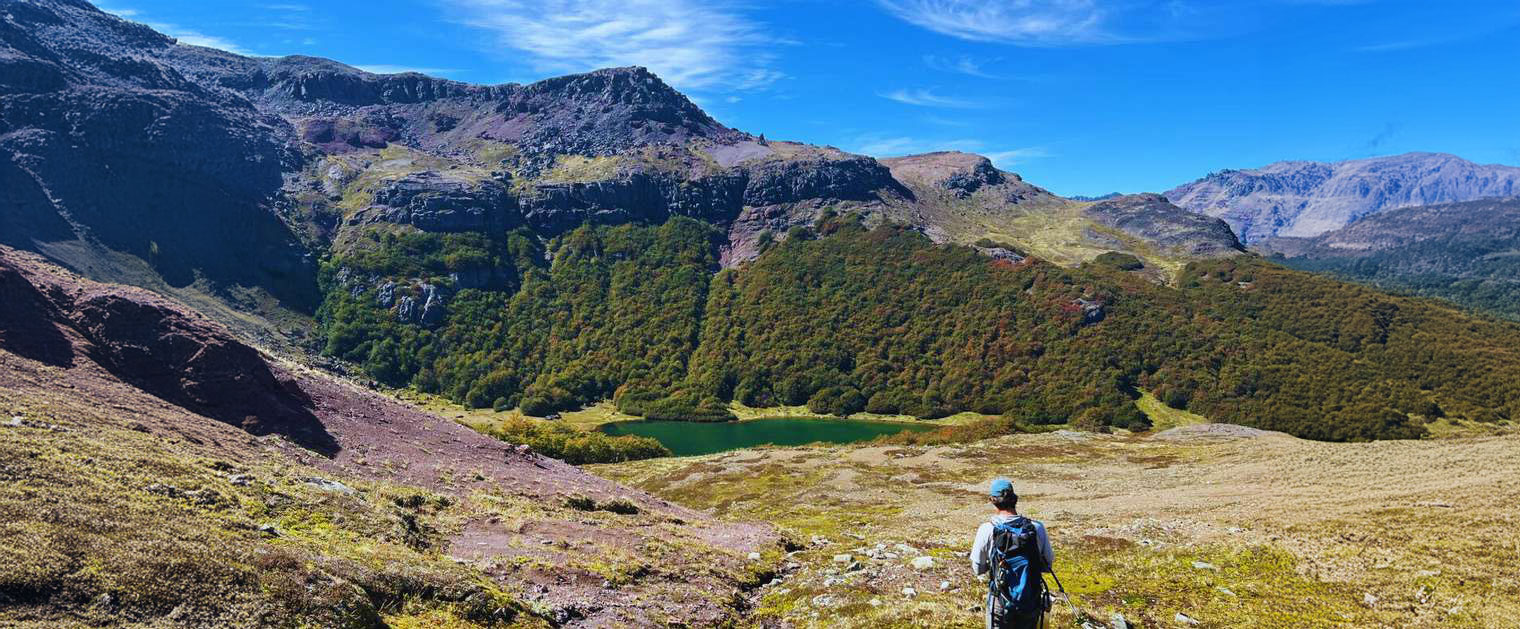
Rio Manso Lodge primarily caters to fly fishers, however, there are a variety of activities for the non-angler, such as guided hiking and/or bird watching through the virgin areas surrounding the lodge, climbing to the nearby mounts, and horseback riding.
Rio Manso 2024 – 2025 Rates
The cost for a 7-night / 6-day fishing package is $7,000 per person based on double occupancy accommodations and two anglers per guide daily. Different length packages are available upon request.
Non-fishermen: $5,400 per person for 7 nights/6 days, based on double occupancy accommodations, or $800 per person per night. Single supplement is $400 per day. Best value is a 7 night / 6 day package.
Contact us for Seasonal Discounts, Special Offers or Promotional Pricing
Included & Not Included
Rates include: transportation between Bariloche to Rio Manso on arrival and departure days, lodging (double bedrooms), all meals, alcoholic and non-alcoholic drinks, fishing guides (one guide for every two anglers), any extra activities (rafting, horseback riding, hiking), boats, belly boats, fishing permits, Internet access, laundry.
Not Included: airfare to and from Bariloche, fishing tackle, gratuities, phone calls, purchases from the fly shop.
A 50% deposit is required to secure a reservation.
Fly Shop & Equipment
Telephone and Internet are available as well. A fully equipped Fly Shop provides anything else you might need: Fly gear: nine foot single handed 3 to 6 weight rods, floating and fast sinking tip lines, 7 to 11 foot tapered leaders ranging from 2X to 6X. Flies: streamers, nymphs, dries (all available at the Lodge).
Getting There
The lodge is near the city of S. C. de Bariloche, which makes access extremely easy. There are several flights a day connecting this city with Buenos Aires or Santiago (Chile). Upon arrival at the local airport, a Rio Manso representative will be waiting for you and take you to the lodge (4WD commuting takes approximately 90 minutes).
Travel Documents
US Citizens visiting Argentina are required to carry a passport. Please be sure your passport will be valid 6 months after your departure from Argentina. When using a passport for proof of citizenship, we recommend carrying a photocopy of your passport picture page and two spare passport photos in a separate piece of luggage. This will greatly expedite matters should you lose your passport during your travels.
Booking at Rio Manso Lodge is easy:
Tap a button below to start the conversation. Our services are free.
Rio Manso Lodge is located on the Eastern bank of Lake Hess and the Manso River in the Nahuel Huapi National Park (the first national park in Argentina), deep in the beautiful Patagonia region of Argentina. Rio Manso is only 90-minutes South West of the city of San Carlos de Bariloche. Despite being close to Bariloche, the Manso River gets little fishing pressure due to its inaccessibility.
Rio Manso guests can expect good fishing for wild rainbow, brown and brook trout in the un-pressured and diverse water that surrounds the lodge. The remarkable quality and size of the trout is a result of the low pressure, conservation efforts, and Rio Manso Lodge’s strict catch-and-release policy. The Manso River, runs for 20 miles around the lodge from its origin at Moscos Lake (20 minutes up-river) and contains a variety of water. Rio Manso Lodge’s experienced guides all speak English. A typical week of fishing at Rio Manso includes fishing from a drift boat, wading the Manso River, floating sections of the Manso or the Quieto, and excellent sight fishing on Lago Hess, Lago Fonk and Lago Roca from the skiff or raft, casting big dries or streams to the banks, as well as a few places where anglers can get out the boat and fish from shore. This variety of water allows fly fisherman the opportunity to fish steamers, nymphs, and dries.
The fishing season in Argentina runs from early November until the end of April. November – December typically have higher water, with the dry-fly fishing increasing in productivity in December. By the middle of December, the dragonflies are hatching in the rivers and lakes and the big fish that come out to eat makes December – January an exciting time for fishing dries at Rio Manso. The summer season (January – February) sees the mayflies and caddis hatches wane, but the terrestrials (grasshoppers, ants, and inchworms) become an important staple in the trout’s diet. In March and April, the water temperatures begin to cool and the fish become more active. Most fishing is done with streamers or large attractor dry flies (big rubber legged dries work well in the lakes) with a brief flurry of dry fly activity right before dark. April is also when the big browns become aggressive, as they get ready to spawn.
Rio Manso can accommodate 8 anglers in spacious, comfortable, rooms, each with private bathroom and some rooms have Jacuzzi tubs. All the rooms at Rio Manso face northwest, overlooking the Manso River, Lake Hess, and enjoy a spectacular view of Mount Tronador on the Argentina – Chile border towering over the Andes. The rest of the lodge is comprised of a warm common area with beautiful wooden posts and beams and a river stone fireplace, where you can enjoy a welcoming fire after fishing, a fly-tying bench, wader room by the Lodge’s entrance, a bar, and a main dining area. Rio Manso also has a sauna and a massage room for guests who want to relax. Since anglers usually end their fishing day between 7:00 – 8:00 PM, hour d’oevres are served in front of the fireplace before dinner, typically between 9:00 – 10:00 PM. Rio Manso’s international menu is accented by local dishes and homemade delicacies, which are enhanced by the lodge’s own garden and excellent collection of fine Argentine wines. There is also a weekly “asado” or traditional Argentine barbeque.
Rio Manso Lodge primarily caters to fly fishers, however, there are a variety of activities for the non-angler, such as guided hiking and/or bird watching through the virgin areas surrounding the lodge, climbing to the nearby mounts, and horseback riding.
Our Services are Free! Contact us for Seasonal Discounts, Special Offers or Promotional Pricing
Rio Manso 2024 – 2025 Rates
The cost for a 7-night / 6-day fishing package is $7,000 per person based on double occupancy accommodations and two anglers per guide daily. Different length packages are available upon request.
The cost for non-fishermen is $5,400 per person for 7 nights/6 days, based on double occupancy accommodations, or $800 per person per night. Single supplement is $400 per day. Best value is a 7 night / 6 day package.
Rates include: transportation between Bariloche to Rio Manso on arrival and departure days, lodging (double bedrooms), all meals, alcoholic and non-alcoholic drinks, fishing guides (one guide for every two anglers), any extra activities (rafting, horseback riding, hiking), boats, belly boats, fishing permits, Internet access, laundry.
Not Included: airfare to and from Bariloche, fishing tackle, gratuities, phone calls, purchases from the fly shop.
A 50% deposit is required to secure a reservation.
Telephone and Internet are available as well. A fully equipped Fly Shop provides anything else you might need: Fly gear: nine foot single handed 3 to 6 weight rods, floating and fast sinking tip lines, 7 to 11 foot tapered leaders ranging from 2X to 6X. Flies: streamers, nymphs, dries (all available at the Lodge).
Getting There: The lodge is near the city of S. C. de Bariloche, which makes access extremely easy. There are several flights a day connecting this city with Buenos Aires or Santiago (Chile). Upon arrival at the local airport, a Rio Manso representative will be waiting for you and take you to the lodge (4WD commuting takes approximately 90 minutes).
Documents: US Citizens visiting Argentina are required to carry a passport. Please be sure your passport will be valid 6 months after your departure from Argentina. When using a passport for proof of citizenship, we recommend carrying a photocopy of your passport picture page and two spare passport photos in a separate piece of luggage. This will greatly expedite matters should you lose your passport during your travels.
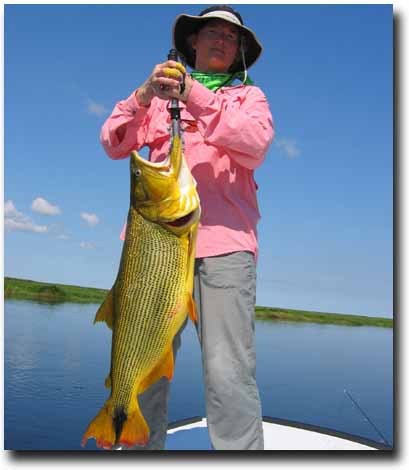
The South American Golden Dorado (Salminus brasiliensis) is considered by many well traveled anglers to be the world’s greatest fighting game fish. This extraordinary jumper combines the running and leaping abilities of a salmon with the ferocity and predatory instincts of a tiger shark. It violently hammers flies and lures, then immediately explodes out of the water in a series of outrageous leaps and line stripping runs.
For many years, one of Latin America’s most exciting game fish was kept a secret in its heartland. In the last few years, the Dorado, or “River Tiger” as it is affectionately called in Argentina, has rocketed to the top of the “hot fish list”!
Throughout much of its equatorial range, the Dorado is caught in heavy rivers in fairly deep, murky waters and generally with heavy spinning or plug casting tackle. However, for anglers preferring to fish relatively light fly tackle or light spinning tackle, in more intimate, relatively clear waters, with even some sight casting opportunities from the deck of a flats skiff, Pirá Lodge offers the perfect alternative.
Golden Dorado (3-6 lbs average, 10+ lbs common, fish over 25 lbs possible)
Season: Mid-October through April (Argentine spring and summer)
Weather: Warm spring and summer conditions in Corrientes Province
Location: Iberá Marshlands, Corrientes Province, Argentina—3.5 million acres of pristine wetlands
Book now, get a quote, or chat with us about Argentina Golden Dorado fishing!
Pirá Lodge is located in the northeastern corner of Argentina in Corrientes Province on the immense Iberá Marsh. One of the most unique and fascinating ecosystems in the world, the Iberá Wetlands is comprised of 3,500,000 (three million five hundred thousand) acres of unexplored and uninhabited marshland that will be the setting for some of the most exciting fishing you will ever do. The marsh is a vast system of pristine creeks, rivers, shallows, and lakes roughly 2.5 times bigger than the Florida Everglades and is home to more than 350 species of birds, 85 mammals and almost 70 reptiles, along with this electrifying game fish!
Fishing Program & Techniques
Pirá Lodge guests fish from state of the art 18 foot Hell’s Bay flats skiffs with poling platforms. Primary fishing areas include the Corrientes River, the Headwaters and the Marsh proper.
The Corrientes River
The River is more traditional fishing usually with an 8 or 9 weight with a sink tip line. Large saltwater type streamer patterns are swung and stripped. One of the most effective patterns is the Andino, a hybrid muddler/deceiver pattern.
The Headwaters
The headwaters offers more floating line fishing and even surface patterns like mice (tied on heavy saltwater hooks) or sliders. Sometimes dorado will take poppers but seem to prefer sliders. The popular “Titanic” steelhead waking fly, has been adapted (tied on heavier hooks) and has been very successful in recent years.
The Marsh
The Marsh fishing is slightly more technical. This is generally clearer water and a stealthy approach is required. Again, the Marsh offers more opportunities for floating line fishing, and Pirá guides have even discovered these fish will eat buggy, rubber legged terrestrial dry flies!
What to Expect
While fish over 25 pounds have been taken at Pirá, most fish will average in the 3 – 6 pound range, with fish in the 10 + pound class taken each month of the season. The average day usually produces around 5 – 10 fish per rod per day. But this can vary widely. Dorado can be moody, but can also just go “on the grab”, and you might release 20 in a morning session.
Fishing Schedule & Gear
Daily fishing hours may vary depending on month and weather. A typical spring fishing day will start in the morning from 8:00 to 12:30, lunch at the lodge, and then afternoon fishing from 3:30 to 7:30. The season comprises the Argentine spring and summer, from mid-October through April.
Fly rods carrying 7, 8 & 9 weight lines are the weapons of choice. It’s best to carry two rods; an 8 or 9 rigged with a sinking line (like a T-200) and a 7 or 8 rigged with a floater. Traditional saltwater streamers and deceivers in black, purple chartreuse and white, some slider and mice patterns, and wire leaders (these are toothy critters) complete the required gear.
Lodge Accommodations & Amenities
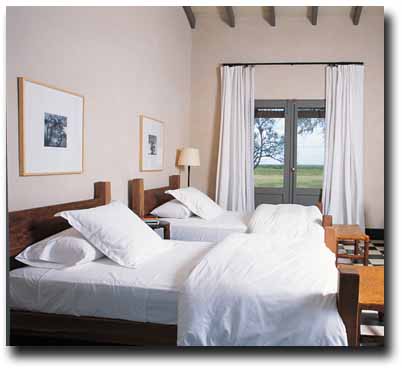
Pirá Lodge is designed to provide its guests not only with a remarkable fishing experience, but also with maximum comfort. The lodge accommodates 12 guests (10 anglers) in 5 rooms and a cottage with 2 rooms. Each room is fully air-conditioned, with two double beds and large bathrooms with double windows, which provide a peaceful space to unwind in a warm bath. The rooms feature French windows, which open out to the shaded verandah with easy access to the 20 meter pool and a beautiful view of the surrounding wilderness. In addition to the comfort of a spacious sitting room, with unique furniture crafted by local artisans, anglers will appreciate the convenience of a fly tying table, and an on-site fly shop, fully equipped with flies, rods, reels and clothing.
Gourmet dining with Argentina’s famed beef and fine wines, traditional “asados” (BBQ´s), delicious regional as well as international cuisine desserts, and the fully stocked bar contribute to create the setting for perfect moments at the end of a perfect day.
Non-Fishing Activities
Other activities available are Kayaking, Bird watching, Horseback riding and snorkeling. Pirá is a strictly CATCH AND RELEASE fishery and strongly encourages the use of barb-less hooks.
Getting to Pirá Lodge
There are a number of options for travel to Pirá Lodge. Most convenient but also most expensive is using a private charter to fly directly to the lodge’s grass airstrip (dependent on water levels) or to nearby Mercedes or Goya Airports. This works well for groups of 4 or more. Alternately, you can fly commercial air to either Resistencia or Corrientes. From there it is a 4 ½ hour ground transfer.
Many will travel through, arriving in Buenos Aires early morning, taking a mid-morning flight to Corrientes where they overnight at the charming Hotel La Alondra, and make the ground transfer to the lodge the next morning.
The most novel travel method is using the overnight Luxury Sleeper bus to Mercedes. This features fully (flat) reclining seats with privacy curtains, much like you’d find on First Class transoceanic flights. This departs Buenos Aires at about 9:30 pm. Dinner and beverages are served and you’ll arrive in Mercedes at about 7:00 am. From there it’s a 1 ½ hour car transfer to the lodge.
Pirá Lodge 2025 – 2026 Rates
Season: October 2025 – April 2026. Rates are in USD per person, based on shared occupancy and boat.
Package Length
Price Per Person
7-nights / 6-days Fishing
$7,950
6-nights / 5-days fishing
$7,495
5-nights / 4-days fishing
$6,395
4-nights / 3-days fishing
$5,150
3-nights / 2-days fishing
$3,950
Rates are per person in USD$ and subject to change
Booking at Pirá Lodge is easy:
Tap a button below to start the conversation. Our services are free.
Occupancy: 12 guests, 10 anglers – 5 rooms & a cottage with 2 rooms. Check in after 2PM / Check out before 10AM.
Single Room & Boat: 60% surcharge
Non-Fisher: $650 per night per person
Fishing License: $100 per person
Full day fishing on arrival or departure day: $850 per boat
Half day fishing on arrival or departure day: $650 per boat
Included & Not Included
Included: Accommodations based on double occupancy; all meals, wines, beer and local and international spirits; professional guide services (2 anglers per guide/boat); loaner fishing equipment (rods, reels & lines).
Not Included: International & domestic airfares; private charters; fishing licenses; laundry service; transfers in & out of the Lodge; gratuities for guides and house staff.
The South American Golden Dorado (Salminus brasiliensis) is considered by many well traveled anglers to be the world’s greatest fighting game fish. This extraordinary jumper combines the running and leaping abilities of a salmon with the ferocity and predatory instincts of a tiger shark. It violently hammers flies and lures, then immediately explodes out of the water in a series of outrageous leaps and line stripping runs.
For many years, one of Latin America’s most exciting game fish was kept a secret in its heartland. In the last few years, the Dorado, or “River Tiger” as it is affectionately called in Argentina, has rocketed to the top of the “hot fish list”!
Throughout much of its equatorial range, the Dorado is caught in heavy rivers in fairly deep, murky waters and generally with heavy spinning or plug casting tackle. However, for anglers preferring to fish relatively light fly tackle or light spinning tackle, in more intimate, relatively clear waters, with even some sight casting opportunities from the deck of a flats skiff, Pirá Lodge offers the perfect alternative.
Pirá Lodge is located in the northeastern corner of Argentina in Corrientes Province on the immense Iberá Marsh. One of the most unique and fascinating ecosystems in the world, the Iberá Wetlands is comprised of 3,500,000 (three million five hundred thousand) acres of unexplored and uninhabited marshland will be the setting for some of the most exciting fishing you will ever do. The marsh is a vast system of pristine creeks, rivers, shallows, and lakes roughly 2.5 times bigger than the Florida Everglades and is home to more than 350 species of birds, 85 mammals and almost 70 reptiles, along with this electrifying game fish!
Pirá Lodge guests fish from state of the art 18 foot Hell’s Bay flats skiffs with poling platforms. Primary fishing areas include the Corrientes River, the Headwaters and the Marsh proper.
The River is more traditional fishing usually with an 8 or 9 weight with a sink tip line. Large saltwater type streamer patterns are swung and stripped. One of the most effective patterns is the Andino, a hybrid muddler/deceiver pattern
The headwaters offers more floating line fishing and even surface patterns like mice (tied on heavy saltwater hooks) or sliders. Sometimes dorado will take poppers but seem to prefer sliders. The popular “Titanic” steelhead waking fly, has been adapted (tied on heavier hooks) and has been very successful in recent years.
The Marsh fishing is slightly more technical. This is generally clearer water and a stealthy approach is required. Again, the Marsh offers more opportunities for floating line fishing, and Pirá guides have even discovered these fish will eat buggy, rubber legged terrestrial dry flies!
While fish over 25 pounds have been taken at Pirá, most fish will average in the 3 – 6 pound range, with fish in the 10 + pound class taken each month of the season. The average day usually produces around 5 – 10 fish per rod per day. But this can vary widely. Dorado can be moody, but can also just go “on the grab”, and you might release 20 in a morning session.
Daily fishing hours may vary depending on month and weather. A typical spring fishing day will start in the morning from 8:00 to 12:30, lunch at the lodge, and then afternoon fishing from 3:30 to 7:30. The season comprises the Argentine spring and summer, from mid-October through April.
Fly rods carrying 7, 8 & 9 weight lines are the weapons of choice. It’s best to carry two rods; an 8 or 9 rigged with a sinking line (like a T-200) and a 7 or 8 rigged with a floater. Traditional saltwater streamers and deceivers in black, purple chartreuse and white, some slider and mice patterns, and wire leaders (these are toothy critters) complete the required gear.
Pirá Lodge is designed to provide its guests not only with a remarkable fishing experience, but also with maximum comfort. The lodge has only five bedrooms, each one of them fully air-conditioned, with two double beds and large bathrooms with double windows, which provide a peaceful space to unwind in a warm bath. The rooms feature French windows, which open out to the shaded verandah with easy access to the 20 meter pool and a beautiful view of the surrounding wilderness. In addition to the comfort of a spacious sitting room, with unique furniture crafted by local artisans, anglers will appreciate the convenience of a fly tying table, and an on-site fly shop, fully equipped with flies, rods, reels and clothing.
Gourmet dining with Argentina’s famed beef and fine wines, traditional “asados” (BBQ´s), delicious regional as well as international cuisine desserts, and the fully stocked bar contribute to create the setting for perfect moments at the end of a perfect day.
Other activities available are Kayaking, Bird watching, Horseback riding and snorkeling. Pirá is a strictly CATCH AND RELEASE fishery.
There are a number of options for travel to Pira Lodge. Most convenient but also most expensive is using a private charter to fly directly to the lodge’s grass airstrip (dependent on water levels) or to nearby Mercedes or Goya Airports. This works well for groups of 4 or more. Alternately, you can fly commercial air to either Resistencia or Corrientes. From there it is a 4 ½ hour ground transfer.
Many will travel through, arriving in Buenos Aires early morning, taking a mid-morning flight to Corrientes where they overnight at the charming Hotel La Alondra, and make the ground transfer to the lodge the next morning.
The most novel travel method is using the overnight Luxury Sleeper bus to Mercedes. This features fully (flat) reclining seats with privacy curtains, much like you’d find on First Class transoceanic flights. This departs Buenos Aires at about 9:30 pm. Dinner and beverages are served and you’ll arrive in Mercedes at about 7:00 am. From there it’s a 1 ½ hour car transfer to the lodge.
Pirá is a strictly CATCH AND RELEASE fishery and strongly encourages the use of barb-less hooks.
Our Services are Free! Contact us for Seasonal Discounts, Special Offers or Promotional Pricing
Pirá Lodge 2018 – 2019 Rates
(Effective October 2018 – April 2019)
Package Length
Double Occupancy
7-nights / 6-days Fishing
$5,950 per person
6-nights / 5-days fishing
$5,100 per person
5-nights / 4-days fishing
$4,475 per person
4-nights / 3-days fishing
$3,800 per person
Included in the rate: Roundtrip transfers Mercedes Airport or bus terminal to lodge (if you fly private charter); 7-nights deluxe lodge accommodations (double occupancy); all meals; all wines, beer; soft drinks and local spirits at the lodge; daily guided fishing, 2 anglers per boat/guide; fishing license.
Not included are: International airfare; transfers, hotels, meals and personal expenditures in Buenos Aires; commercial flights into either Corrientes or Resistencia (or private charter costs if you fly into Mercedes); transfers from Corrientes, Resistencia or Goya airports to lodge; tackle; imported liquors; laundry service; overweight luggage charges; gratuities.
Single occupancy 60% more; Non-fisher $450 per night/person.
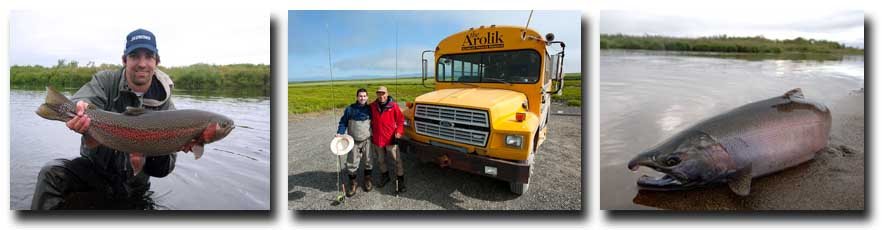
The Arolik River is a clear, lake-born tributary that slips quietly through tundra and shrub willows before emptying into the Bering Sea near the Yup’ik village of Quinhagak. It shares much of its geography with the better-known Kanektok, yet remains remarkably private thanks to strict stewardship by the local Native corporation. For traveling anglers, the Arolik is best described as Alaska’s boutique trout fishery: intimate wades, sight-casting in gin-clear water, and broad-shouldered leopard rainbows that glow against the polished gravel.
Angler Adventures guests experience the river through Alaska West, which operates the only guided program allowed on the Arolik. That exclusivity keeps pressure light while still giving visiting anglers a comfortable base camp, seasoned guides, and seamless logistics between the Kanektok and the Arolik.
Let us help you build a week on the Kanektok and the Arolik.
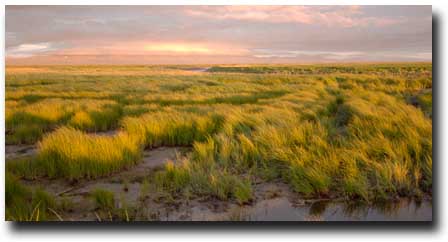
The Arolik begins in the Ahklun Mountains and meanders through tundra channels before reaching the Bering Sea. Most of its run is shallow, braided, and easily waded. Willow, alder, and cottonwood thickets shade grassy cutbanks that hide rainbow trout with bold leopard spotting. With only six guided rods allowed per day, the river feels wild and quiet even in the heart of the season.
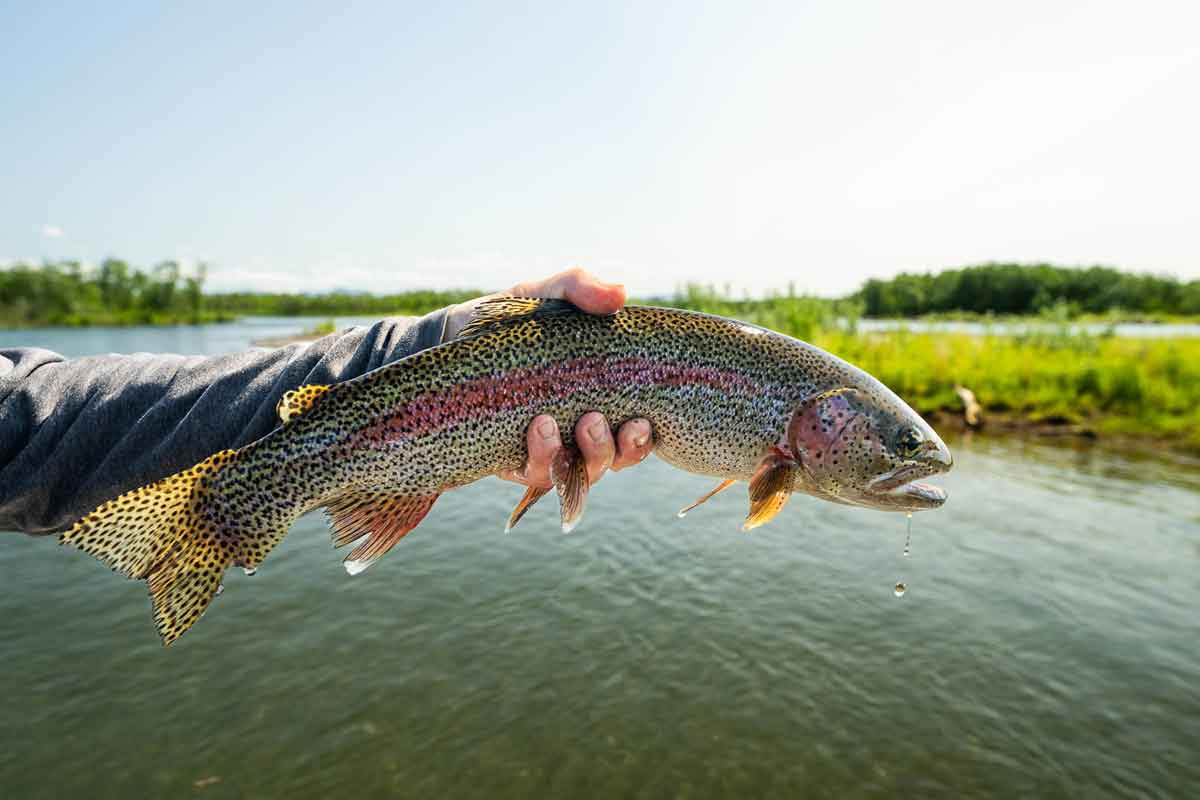
Five species of Pacific salmon flood the river from late June through September, joined by Dolly Varden and char. The real draw, however, is the rainbow population: acrobatic, broad-shouldered fish that camouflage themselves against small stone and pebble bottom. Clear water and sparse cover make sight-fishing common, and mouse eats often happen within plain view.
Access & Daily Rhythm
Guests stay at Alaska West, a comfortable tent camp on the Kanektok River. Each morning, Arolik-bound anglers travel by boat to Quinhagak, transfer to a short road, then launch on the Arolik for an upriver run. The travel time is about an hour, depending on where you start fishing. Guides run lightweight, jet-powered aluminum skiffs that can slide over gravel bars, row quietly into side channels, and position anglers for both swinging and sight-casting.
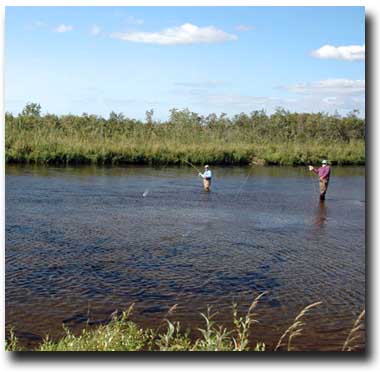
Fishing pairs share a guide and a boat. River days mix short drifts with wade sessions, and guides are tuned in to where rainbows tuck in behind salmon or prowl grassy banks for rodents. Because the river is fly-fishing only and strict catch-and-release for all trout and char, fish remain aggressive throughout the season.
Life at Alaska West
Alaska West balances the raw beauty of western Alaska with comforts that matter to serious anglers: heated Weatherport tents with real beds, drying space, and private shower tents with plenty of hot water. Meals fall into the “camp cuisine” category–hearty breakfasts, packed lunches, and family-style dinners in a dedicated dining Weatherport. While it is not a white-tablecloth experience, the kitchen staff keeps anglers well fed and ready for long days on the water.
Evenings tend to stretch late under the midnight sun. Guests often wander the riverbank after dinner, swap stories in the lounge tent, or prep mouse boxes and leech assortments for the next day’s float.
Conservation & Stewardship
The Arolik operates under the strictest angling ethics in the region. Fly tackle only, barbless hooks, and full catch-and-release for trout, char, and salmon keep the fishery healthy. Rod counts are tightly limited to maintain the exclusivity the village elders insist upon. That stewardship, combined with the Alaska West guide team’s deep familiarity with the river, ensures each visit leaves a light footprint.
Seasonal Fishing Calendar
Species
Prime Window
Notes
Leopard rainbow trout
June through September
Sight-fish with mice, leeches, flesh, and eggs; behavior tracks salmon spawn.
King salmon
Mid June to early July
Early summer pushes; swing or strip big intruders and leeches.
Chum salmon
Late June to late July
Great for numbers and driving bead hatches for trout.
Pink salmon
Late July to mid August (even years)
Bonus action that bolsters trout feeding.
Coho (silver) salmon
Late August to mid September
Explosive topwater fishing; excellent finale to the season.
Dolly Varden & char
July through September
Follow salmon; brilliant fall colors and steady action on leeches and beads.
Plan Your Week
Most anglers split time between the Kanektok and the Arolik–using one to learn the other, or chasing specific species depending on run timing. Let us know what you want to prioritize and we will build a daily schedule around that mix.
Space is limited to six rods per day on the Arolik. Reach out early to secure prime dates.
Because the Arolik does not have permanent infrastructure, anglers use nearby operations as their base. Start your planning with these Angler Adventures partners:
Alaska West — Jet boat access to both the Kanektok and the Arolik, comfortable tent camp, veteran guide staff.
More Alaska Options — Explore companion itineraries across Western Alaska if you want to combine the Arolik with additional fisheries.
Our Services Are Free
Trip packages start and finish in Quinhagak, Alaska. We will help secure preferred dates, pair you with the right guides, and coordinate travel to and from the Alaska West camp.
The Arolik River, near the Kanektok in Western Alaska River, is as clean, clear and pristine habitat for spectacular leopard famous for it’s rainbow trout and all 5 Pacific Salmon as you’ll find in the world. There is no lodge on the Arolik (anglers sleep at Alaska West) and no guided anglers other than Alaska West clients are allowed on the river.
Long held in secure stewardship by the Yu’pik elders of the Native Village of Quinhagak, some five miles to the north, the Arolik River runs through Alaska’s remote western coast. The Arolik is an intimate lake born stream heading from the Ahklun Mountains and terminating in the Bering Sea. From the foothills at Snow Gulch it is braided on much of its run as it cuts through the tundra while being shrouded by willow, alder and cottonwood shrubs with many grass-lined banks.
The Arolik is fished from the Alaska West camp, located on the Arolik’s big sister, the Kanektok. Both rivers have clear water, easy wades, and a plethora of fish. The Arolik also has all five species of Pacific Salmon, Dolly Varden, Char, and a particular abundance of the well conditioned, acrobatic and broad-shouldered Leopard Rainbows.
The Arolik is so clear, the small stone and pebble riverbed seems to have no water flowing over it. The resident Alaska trout must camouflage themselves against the river bottom to protect themselves from predators. This survival effort has produced some of the most beautiful Leopards you will ever be lucky enough to see. The lack of easy hiding places for these trout and the clear Arolik water creates sight-casting opportunities. Native Arolik Rainbows will take a variety of wet and dry flies, including mouse patterns, leeches, egg patterns, flesh flies and occasionally some caddis and stoneflies.
The clarity of the Arolik’s water, its grassy banks, and the aggressive leopard rainbows make it a great place to fish mouse flies. The Arolik trout are so aggressive, especially for a big meal like a mouse, due to the few short months the leopard rainbows have in the feeding season. Fishing mouse patterns is all about fishing big flies for big, explosive takes. While the Arolik can be very productive, rainbows can also be challenging. The Alaska West guides have spent years figuring out their habits and really know the Arolik River.
The Arolik subscribes to the strictest conservationist angling ethics. It is fly fishing only; catch and release is a strict exercise for all trout and all other species. Rod count per day is restricted to maintain the integrity of the Arolik’s pristine exclusivity and minimize any human impact.
Anglers fish the Arolik two to a boat. An experienced, registered guide captains each boat. All aluminum flat bottom boats are use, which are propelled by jet driven outboard motors. These craft are able to navigate in very shallow water, availing more water to anglers than is accessible via other means. The boats are light enough to row effectively, making powering up river and rowing down a common method of pursuit.
Arolik clients are accommodated at the Alaska West tent camp on the Kanektok River. The Arolik anglers are transported from the Alaska West camp daily, by boat down river to Quinhagak, then by vehicle on a road from Quinhagak to the mouth of the Arolik, then again by boat upriver on the Arolik. This entire trip will take an average an hour or more, depending on the final destination on the Arolik. There are no structures whatsoever on the Arolik, which is the way anglers fishing there prefer it.
Back at Alaska West you will have all the basic necessities of the serious angler: a floor at your feet, a bed in a heated tent and a roof over his head. Guests will be able to hear the birds through the walls and the midnight sun will light their rooms in July. Guests shower in privacy thanks to shower tents and a large supply of hot water.
For your dining pleasure, Alaska West offers camp cuisine. It is prepared skillfully and creatively in a fully staffed kitchen. The serious angler will find few culinary shortcomings. Dinners are an enjoyable and fitting end to an active day of catching fish.
Now you see why it is named simply The Arolik and tagged Alaska’s Private Reserve. The uniqueness and exclusivity that is the Arolik is an experience outside of commonplace. Be one of the lucky few anglers to experience this unique, pristine fishery. Come visit this secret and special place that is the Arolik. Space is limited to 6 rods so please book early.
Our Services are Free!
Trip packages are all-inclusive and start from Quinhagak, Alaska. Please contact Angler Adventures to request a current quote. Since the Arolik is fished from the Alaska West camp on the Kanektok, most anglers divide the week between the two rivers.
Salmon fishermen, steelheaders, or anyone keen to pursue “overstuffed, energized anadramous torpedoes” should head to Southern Argentina this winter. Angler Adventures represents Kau Tapen Lodge, Villa Maria Lodge and Aurelia Lodge, all located on the famous Rio Grande in Tierra del Fuego, where the sea run brown trout fishing gets better every year! Catch and release and repeat spawning have dramatically increased the numbers of returning sea trout that average 10.5 pounds, and range to well over 30!
brown trout, rainbow trout, steelhead trout
Professional guides and deluxe accomodations
Ecotourism possibilities and more in Tierra del Fuego
Book now, get a quote, or chat with us about Chile & Argentina fly fishing!
Nervous Waters is an Argentine Company owned and operated by Fernando & Jorge de las Carerras. The Carerras family opened the first fishing lodge on the Rio Grande, and Nervous Waters now operate 2 of the best lodges on the river system. Nervous Waters currently owns and operates 8 lodges around the globe including Pira Lodge and Suinda Lodge (Dorado fishing) in Corrientes Province, Bairs Lodge and Abaco Lodge (Bonefish, Permit, Tarpon) in the Bahamas and others in Chile and Argentia. The Nervous Waters properties rank among the very finest fishing lodges in the world.
Kau Tapen first opened in 1986 and is the lodge that got sea run trout fishing going on the Rio Grande. Today, it’s repeat client rate is one of the highest in the industry. It is considered one of the finest lodges in the world of fishing. You must pay a premium to stay at Kau Tapen, but it is worth it, if you call early enough to get space.
Villa Maria Lodge opened in 1996 on the historic Estancia Jose Menedez and offers 16 km of water on the lower Rio Grande downstream from Kau Tapen. This is bigger water, perfect for the Spey rod enthuisiast and offers first crack at dime bright searun browns fresh from the salt.
Another excellent option on the Rio Grande is the beautiful Aurelia Lodge, situated just above Kau Tapen on Estancia Rosita. Owned by Ricardo Hermoso and managed by veteran Rio Grande guide, Peter Pereira Mullins, Aurelia offers an impressive 8 miles of double bank fishing on the Rio Grande plus15 miles on the Rio Menendez for just 8 rods. The recently refurbished lodge offers superb accommodations combining classic Patagonian ambience with modern comfort.
Tierra del Fuego can be combined with the outstanding trout fishing offered by our outfitters in Patagonia, Argentina or dorado fishing in Corrientes.
It’s a lot to take in. We know!
Let us help you find the perfect destination and travel package. Our services are free. We just help you save time and make all the arrangements!
Labrador is the most remote of the Eastern Canadian provinces, and as such, offers some of the best fishing. The trophy brook trout is Labrador’s biggest drawing card, and the Minipi watershed is one of the world’s finest fishery for trophy squaretails. Minipi Brookies average 5.5 pounds, specimens over 8 pounds are taken most years, and several world records (to 10 pounds) have been established here. Landlocked arctic char to 12 pounds and northern pike to 30 are available as well.
Lee Wulff first explored Labrador and the Minipi watershed some 40 years ago and the fishing remains as good as it was when Lee first cast a fly here. Much of the success is thanks to the strong catch and release ethic encouraged by Cooper’s Minipi Camps who outfit the watershed from three camps, Ann Marie, Minonipi and Minipi Lake. If you’d like to catch a 7 or 8 pound brook trout on a dry fly, Cooper’s Minipi Camps is the best place in the world to try.
For anglers looking for more consistent action and not necessarily trophy fish, we recommend Crooks Lake Lodge on the headwaters of the Eagle River. Crooks Lake offers a mix of river and lake fishing with fish averaging around 4 pounds, occasionally up to 6, but the numbers of fish caught are much greater than in the Minipi system.
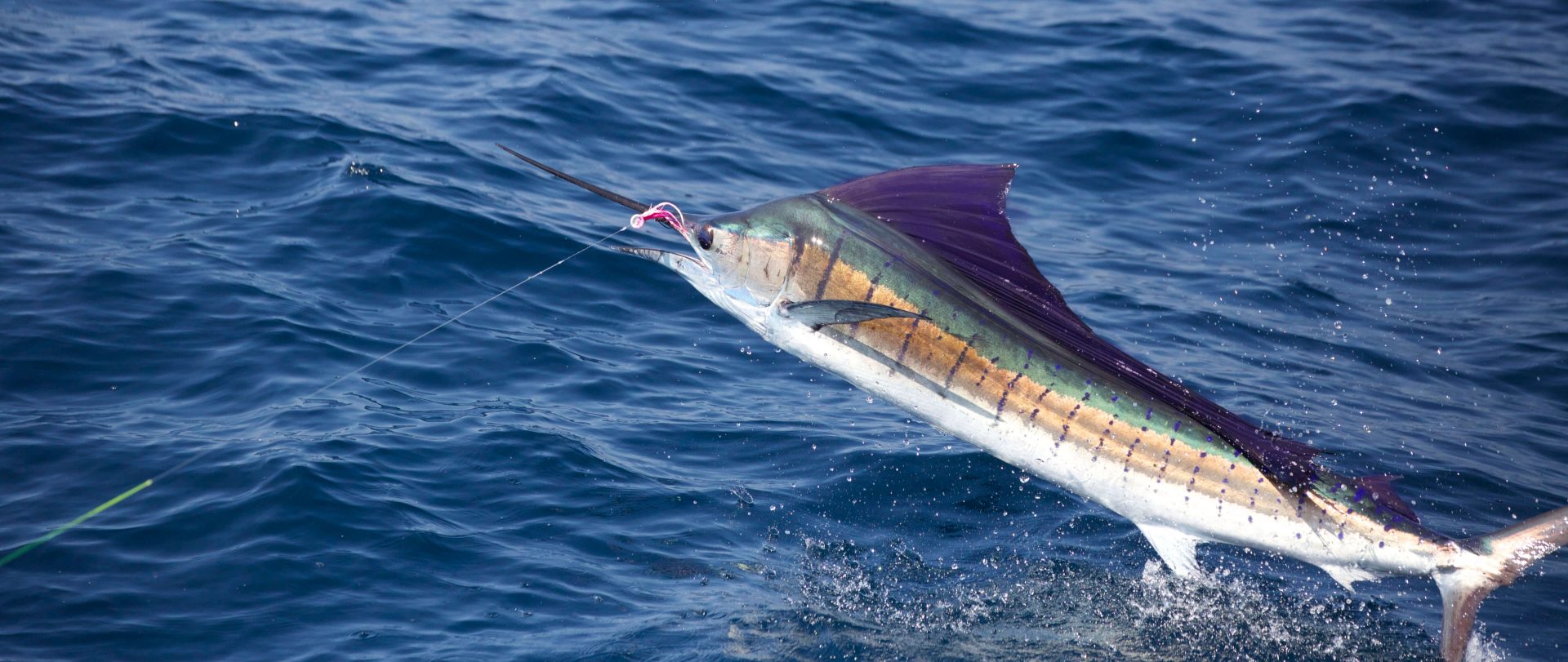
Guatemala is without question the Sailfishing Capital of the World. Guatemalan fishing boats typically average 15 – 20 sailfish bites per day, year round and during hot bites, it’s not unusual to raise 30, 40 or 50 or more sailfish in a single day. The incredible numbers of sailfish have attracted some of the world’s top international offshore captains to Guatemala and a fleet of comfortable and well equipped sportfishing boats. The top boats release over 2,000 sailfish a year.
Guatemala sailfish average 70 to 90 pounds and commonly exceed 100 pounds, especially are during the fall months. Much of the fishing takes place only 10 to 20 miles offshore.
But fishing in Guatemala in not just about sailfish – marlin, dorado (mahi mahi), and yellowfin tuna are the most common offshore species in Guatemala, and roosterfish are taken inshore. While not as abundant as sailfish, blue marlin are caught on a regular basis. They average 250 to 400 pounds, but larger fish in the 800 pound range have been released.
It’s not unusual to encounter large schools of dorado running from 10 to 40 + pounds.These acrobatic gamefish are great fun on light tackle or 9-weight fly rods. But keep a sharp eye – big marlins are frequently found underneath these dorado schools!
There’ve been a lot of changes in Iztapa, Guatemala since Capt. Hank Robbins pioneered this incredible fishery in the early 80’s. While there are many more boats, the fishing seems to get better. Incredible records have been set in recent years, like the legendary Capt. Ron Hamlin’s astounding 124 sailfish release day on the Captain Hook, or Capt. Chris Scheeder’s 57 sailfish on the fly in one day. Most importantly, the government of Guatemala has recognized the immense value of the resource, passing legislation not only mandating catch and release for sails, but making it illegal to possess any sailfish, effectively protecting the species from any commercial harvest. Such forward thinking will assure that the fishing for sailfish in Guatemala will remain the best in the world for many years to come.
The options for sailfishing in Guatemala have increased substantially since our first explorations with Capt. Hank 20 some years ago. New lodges and some of the world’s top offshore Captains bring exciting new choices for anglers looking for world class fishing for sailfish. (Please click on links for rates and information):
Casa Vieja is a beautiful new lodge, located less than one mile from the marina, featuring the most luxurious accommodations, the best game boats in the country, and a stable of some of the world’s most renowned blue water captains.
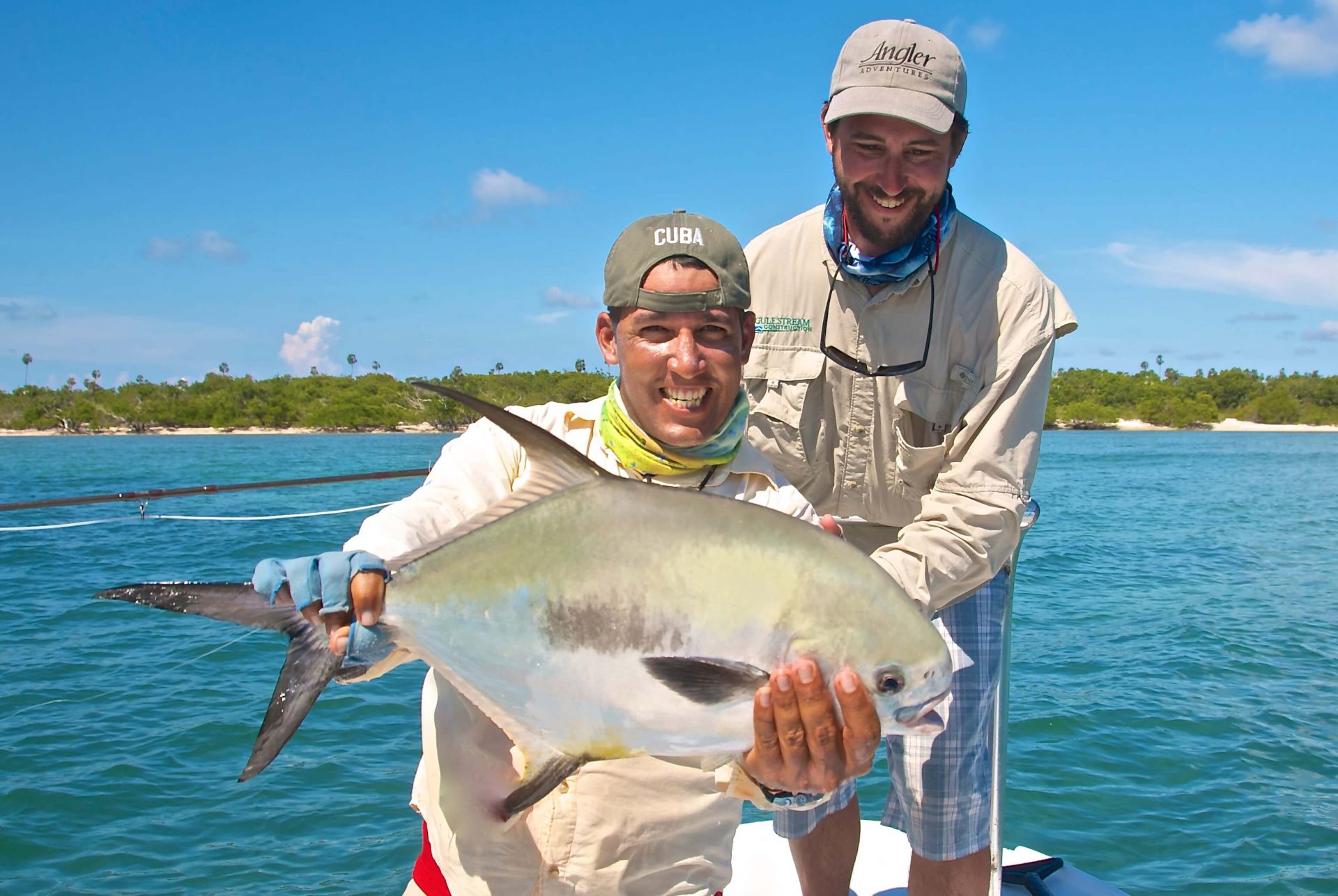
Picture a large tropical island with vast wilderness flats bordering virgin mangroves adjacent to healthy coral reefs. Picture these flats teeming with abundant bonefish, permit, tarpon, snook and other game species. Then further visualize these areas being protected as national parks, with zero commercial fishing, and hardly any boat traffic, and a strictly limited number of sportfishing rods, catch and release only, all under the sound management of a company dedicated to preserving this flyfisherman’s paradise. Sounds too good to be true? This is Cuba.
Avalon Cuban Fishing Centers (ACFC) has been active in promoting Sportfishing in Cuba for 18 years. They have exclusive license to outfit for a limited number of rods in a few protected areas, both on the south and the north coast. ACFC destinations offer a mix or live aboard “mother ship” or land based accommodations which include Jardines de la Reina, Cayo Largo and Isla de la Juventud on the south coast, and Cayo Cruz on the north coast.
2015 will be remembered in Angling history as the year it became legal for US Citizens, in possession of a “people to people” travel letter from the non-profit fisheries research and conservation organization Bonefish Tarpon Trust (BTT), to sport fish in Cuba.
2015 is also the year travel restrictions were lifted, making it legal for US airlines to fly to Cuba, US travel agents to book travelers to Cuba and US insurance companies to offer travel insurance to US Citizens traveling to Cuba.
Angler Adventures has been assisting a limited number of US anglers traveling legally to Cuba for several years. But, the easing of restrictions in general and the travel license from BTT in particular, opens the door for any US angler wanting to fish Cuba.
What hasn’t changed (and will take years to catch up) is the tourist infrastructure within Cuba and the transportation network to Cuba. Traveling to Cuba is still complex. We recommend using a knowledgeable, qualified travel agent, whether it’s your first trip or your twelfth.
In addition to having a staff of fishing experts, Angler Adventures is a full service travel agency, licensed to sell travel insurance. Angler Adventures can assist you in selecting a fishing location in Cuba, prepare you for what to fish for and what to bring, assist you in obtaining the travel letter from the BTT, assist with your Cuban Visa, create the most efficient travel itinerary for you and your group and offer you the protection of travel insurance for trip cancellation, trip interruption, emergency medical evacuation, and more.
Call us today at 1-800-628-1447. There is so much more we’d like to share with you about this fascinating country and phenomenal saltwater fishery.
Excellent steelhead fishing has made British Columbia the go-to destination for targeting wild trophy steelhead. Fly anglers travel from all over the world to visit British Columbia to fish the famous summer steelhead runs and maybe land a trophy-sized 30-pounder. Known for long runs and multiple jumps, these large sea-run Rainbows are aggressive, extremely strong, and don’t quit a fight easily. Because these British Columbia steelies live up to their reputation, most lodges average 95% of their guests returning each year. Our fishing operations in British Columbia offer excellent steelhead fishing on the Dean and a truly unique luxury experience in the wilderness of western Canada. The Steelhead runs have continued to get better, with higher numbers of “big fish” being hooked due to a strictly enforced catch and release only policy throughout the season. British Columbia Rivers also provide excellent fishing for Pacific Salmon, Rainbow Trout, Cutthroats, and a variety of other fish.
BC West is located on one of British Columbia’s premier steelhead rivers, the Dean River. The Dean’ steelhead are widely acknowledged as the hottest sea-run rainbow trout in the world, and the Dean commands a high position on the “must fish life list” of nearly every traveling flyrodder. BC West is the premier lodge, located on the Lower Dean just below the famous Dean River Canyon and offers anglers their best opportunity to challenge these supercharged salmonids at their peak condition, chrome bright and fresh from the salt. Big bruiser chinook salmon in June and early July and acrobatic coho salmon in late August offer spicy alternatives should you tire of chasing steelies!
Moose Lake Lodge located 300 miles North of Vancouver in the Upper Black Water/Upper Dean wilderness and offers bountiful rainbow trout fishing on nearby lakes and rivers. Moose Lake also off optional fly-outs to coastal waters or the option of the Dean River Outpost Camp on the Upper River providing a variety of fishing opportunities for not just rainbows and steelhead, but Pacific Salmon, Cutthroat, Dollies, Kokanee and Whitefish.