Author: Evan Peterson

  • Tierra del Fuego: Giant Sea Run Trout on the Rio Grande

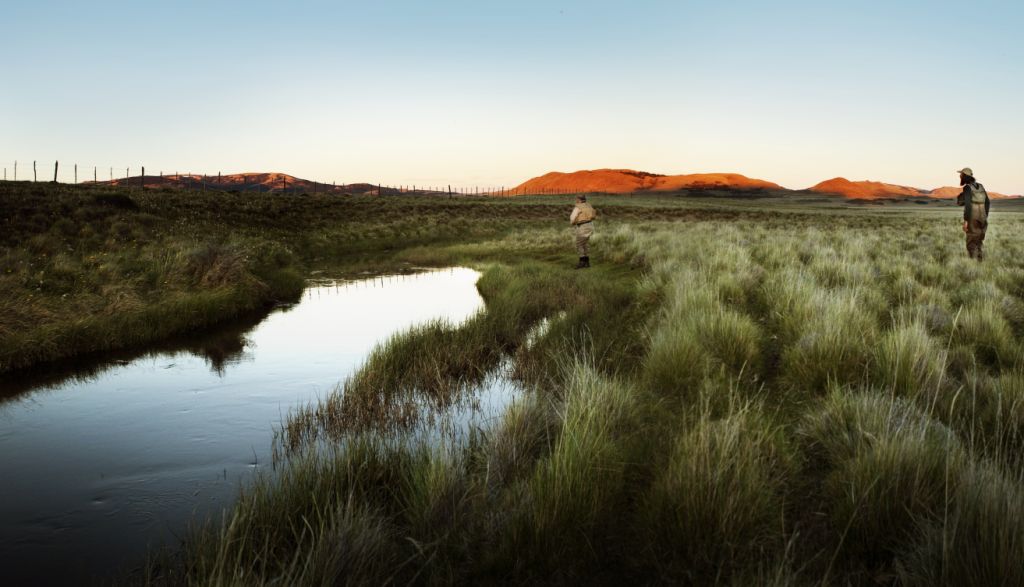
    For those among us who love swinging flies in rivers for big salmonids, it can be a long winter! But you can swing to your heart’s content all winter long on the world’s greatest sea trout river! The Rio Grande in southern Argentina produces sea run brownies that average 12 pounds and frequently top the 20-pound mark!

    Kau Tapen Lodge

    The original – the classic: Kau Tapen, the first lodge built on the Rio Grande, fishes 12 rods on 10 miles of the Rio Grande and an additional 15 miles on Rio Menendez.

    The normal rate at Kau Tapen is $7,250 p.p. from your arrival in Rio Grande City.  International airfare to Buenos Aries, city transfer, hotels and in-country airfare to Rio Grande can cost another $2,200 – $2,500. However, Kau Tapen is offering a great “Hassle Free” inclusive package during selected weeks amounting to a savings of nearly $2,000 per person:  2011 Dates: Jan 8 – 15, Mar 19 -26 or Mar 26 – Apr 2.

    Inclusive Package Includes: Round trip Airfare Miami to Buenos Aires; Transfer from International airport to Hotel; 1 night at the Loi Suites Recoleta (sgl room); Transfer from Hotel to Domestic Airport; Flight Buenos Aires – Rio Grande – Buenos Aires; 7 nights + 6.5 days fishing at Kau Tapen Lodge; Transfer from domestic to International airport

    Rate: USD $8,105 per person (or just $6,796 not including international airfare).

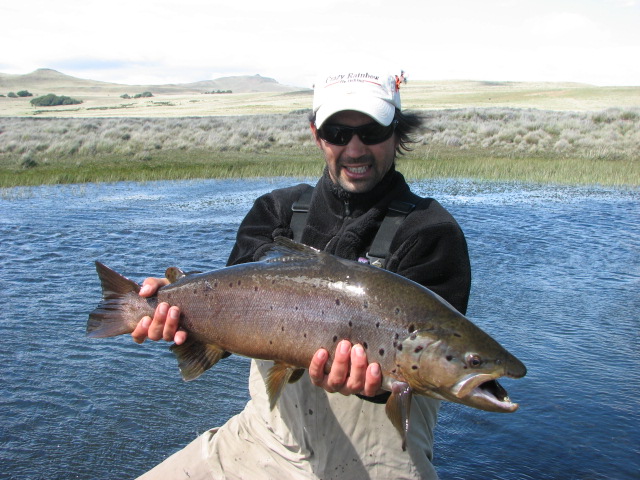
    Nice Sea Run Brown Trout from Kau Tapen Lodge
    That's a bright fish!

    Villa Maria Lodge

    Kau Tapen’s sister lodge, Villa Maria is situated just downstream from Kau Tapen, near the tide head, and is the choice location to intercept the freshest, brightest sea trout. Normally weeks are $6,750 per person from Rio Grande City, but Villa Maria is also offering a domestic air-inclusive package for the week of March 25 – April 1, 2011, $6,550 per person; a savings about $1,000. This would include all of the above except international airfare to Buenos Aires.

    Aurelia Lodge

    Aurelia is the next estancia upstream from Kau Tapen’s water and offers 6 miles of double bank fishing on the Rio Grande, and 15 miles on the Rio Menedez, Aurelia’s upstream location makes it most desirable during the second half of the season when their pools are literally stuffed with fish! Good space is still available for late February and March weeks. Rates from arrival in Rio Grande range from $3,580 – $4,680 per person until March 6th. The rate is $5,890 per person from March 6th – April 17th.

  • Estancia del Zorro Chile Fishing Report

    Estancia del Zorro Fishing Report

    Great Trout Fishing in Chile


    Hi Chip

    Hope that you are all doing great there in Connecticut.   A small report on what is going on at the Estancia, to wet your appetite.

    Last week the fishing at the ranch was outstanding to say the least. Our guests caught very nice trout on the Pedregoso Creek, the Coyhaique River and of Course on the Zorro Spring Creek.

    The Pedregoso was particularly productive there we have been averaging 50 trout per guest a day (between 12 and 19 inches).

    At the Zorro Creek they caught an overage of 15 trout per day, they were from 16 to 24 inches. (all in dry flies, since they did not want to use nymphs).

    We are starting to see some pretty good hatches in the afternoon (may flies and caddis); we expect that the fishing in the next weeks will keep getting better and better.

    Now we have a group from New York and Pennsylvania, they are here for the second time and were having a blast in the Pedregoso today.

    For more information, call (800-628-1447 / 860-434-9624) or email Chip Bates (chip@angleradventures.com) at Angler Adventures. 

    Big Browns from the Estancia del Zorro Spring Creek

  • 2 for the Price of 1

    2-for-1-deals-from-Angler-Adventures

    Angler Adventures has negotiated several value packed “2 for the price of 1” deals at some of our premier lodges. For more information, please click on the lodge name, or call us at 800-628-1447 (860-434-9624).


    Paloma-River-Lodge

    • Spectacular, remote setting.
    • 6 person capacity.
    • Rainbows and big Browns.
    • Normal weekly price $3,250 per person, double occupancy / shared guide.
    • Angler Adventures’ Special for November 2009: $1,625 per person double occupancy / shared guide.


    Lodge-Name-Test

    • Excellent Bonefishing with good chances at Permit.
    • Access to Gorda Cay and Mores Island.
    • Price Reduction for 2010.
    • Normal weekly price $2,820 per person double occupancy / shared guide.
    • Angler Adventures’ Special through February 2010: $1,813 per person double occupancy / shared guide.


    Turneffe-Island-Resort

    • Permit, Bonefish, and Tarpon.
    • 30-miles off the coast of Belize.
    • Only 6 spots currently available: 2 – November 7 – 14, 2009 & 4 – November 21 – 28, 2009.
    • Normal weekly price $3,902.58 per person, double occupancy / shared guide.
    • Angler Adventures’ Special: $2,573.09 per person double occupancy / shared guide.


    Abaco-Lodge

    • Direct access to Bonefishing in the Marls.
    • Nice Accommodations and Gourmet Meals.
    • Great location for non-anglers.
    • Normal weekly price $6,800 per couple double occupancy / shared guide.
    • Angler Adventures’ Special, February 1st – March 15th, 2010: $4,250 per couple double occupancy / shared guide.


    Acklins-Island-Lodge

    • Extensive Hard Sand Flats.
    • Wade fisherman’s paradise.
    • Comfortable cottage style accommodations.
    • Normal weekly price $3,085 per person double occupancy / shared guide.
    • Angler Adventures’ Special for bookings confirmed before January 1, 2010: $1,962.50 per person double occupancy / shared guide.


    Nomads-of-the-Seas

    • Experience Chilean Patagonia in luxury.
    • Unparalleled level of Service.
    • Access to typically inaccessible fertile fishing grounds.
    • Normal weekly price $17,850 per person double occupancy / shared guide.
    • Angler Adventures’ Special: $8,925 per person double occupancy / shared guide.

    These discounts are offered to new reservations only and do not apply to existing reservations, nor date changes to existing reservations.  Discounts for alternate times, or other lodges may be available. If the above offerings aren’t exactly what you’re looking for call us at 1-800-628-1447; and we’ll find you the best possible deal!

    800-628-1447 / 860-434-9624
    Fax: 860-434-8605
    Email: info@angleradventures.com
    PO Box 872, Old Lyme, CT 06371
    Website:www.www.angleradventures.com

  • Arroyo Claro Presentation

    Jorge Graziosi was the guest speaker at a luncheon held September 9th, 2009 at the Anglers’ Club of New York, 101 Broad Street. Other invited guests included three representatives of Angler Adventures; owner Chip Bates, Travel Manager Judy Hall, and Webmaster Evan Peterson.

    Jorge Graziosi has been guiding in Patagonia, Argentina since 1968. In 1999 he built and opened Arroyo Claro Lodge, located in the beautiful Carrileufu River Valley, a 3-hour drive south of Bariloche and 3-hours from the Chilean border. Jorge may be the only outfitter offering guests the opportunity to fish both Argentina and Chile. Arroyo Claro Lodge will host an Anglers’ Club outing January 23-30, 2010. Arrangements for the Anglers’ Club Argentina trip are being handled by Angler Adventures. Click here for more information on Arroyo Claro Lodge or contact Chip Bates at Angler Adventures: (800) 628-1447 or Chip@angleradventures.com.

    We hope you enjoy Jorge Graziosi’s slide show presentation to the Anglers’ Club, below.  If you would like the slide show to auto-play, please click on the menu in the lower left hand corner and select auto-play.  Click here to read Angler Adventures September 2009  Newsletter.

    [slideshare id=2000761&doc=jorgesacnypresentation-090915104447-phpapp01]

  • The GIANT Salmon of Russia’s Kola River

    Russia’s Kola Peninsula is well known as having the best Atlantic salmon fishing found today anywhere in the world. Many anglers equate “best” with big numbers of fish. And rivers like the famed Ponoi River produce numbers that are staggering compared to any other salmon rivers in the world.

    Where the yardstick of high quality fishing in most Canadian rivers is considered a 1 fish per rod per day, it’s not uncommon for anglers to land 40, 50 or even 60 salmon in a week of fishing on the Ponoi. While the Ponoi is considered the single most prolific salmon river in the world based on numbers of fish, the typical Ponoi catch is comprised of about 80% grilse or small salmon under 10 pounds. A smaller percentage will range 10 – 20 pounds, and a few over 20 pounds are taken each season.

    Many seasoned salmon anglers tend to perceive the “quality” salmon fishing experience as one which presents opportunities to catch truly large Atlantic salmon. Targeting large salmon usually translates to a sacrifice in numbers landed. Many anglers would be happy with a 2 – 3 fish week that included one large salmon (anything over 20 pounds), or thrilled with a 1 – 2 fish week that included a “trophy” salmon (let’s say anything over 30 pounds). In most of the world’s salmon rivers, the possibility of a fish over 40 pounds (let’s just call these “monsters”) is a far-flung dream. But there is one incredible river system in Russia that produces good numbers of large, trophy and even monster salmon – the Kola River.

    The Kola River is situated on the western end of Russia’s Kola Peninsula, just north of the Arctic Circle. The river flows northward from a series of lakes in the center of the penisula, eventually joining the Tuloma River 12 km south of the city of Murmansk. The Tuloma empties into the Barents Sea, north of the city. The Kola is a big, brawling river strewn with large boulders and many huge rapids, indicative of the powerful and enormous salmon that ascend her strong flows.

    I fished the Kola the first week of July and found it to be, as advertised, an amazing big fish river. Before departing on July 9th, I checked the log book and tallied an incredible 185 fish over 20 pounds landed since June 1st! 67 of these were over 25 pounds, 17 were

    over 30 and 4 eclipsed the magical 40 pound mark! The biggest landed to date this year was 44 pounds, but fish approaching the 50 pound mark have been taken, and fish larger than this have been lost!


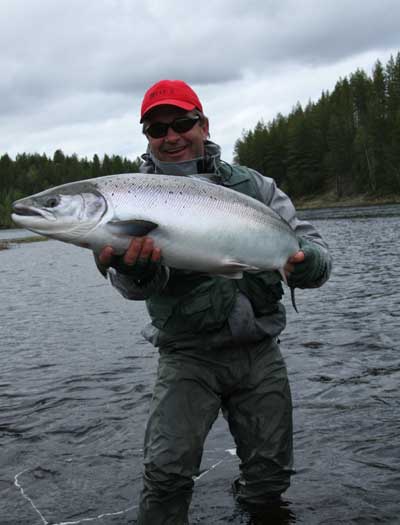
    Dr. Jim York with a massive hen taken in Home Pool within view of the lodge!

    Camp host, Frank Larsen told us the river was about 3 foot higher than normal for that time of year and the guides felt many of the salmon were not holding but were runnning right through on the high water. Depsite this, catch rates during my week were still impressive. Most anglers landed between 2 – 4 fish each day, and occassionally as many as 6. The top rod for the week finished with 24 fish. Individual catches of 30 – 40 fish per week are not uncommon in July with normal water levels. The grilse run had just started and about 30% of the catch reported were grilse. This ratio can increase to 50% by month’s end, but big salmon have been taken throughout July.

    While many of the truly large fish move upriver in June, there were still some big guys around during my week. My biggest for the week scaled 27 pounds but there were numerous others that size or larger landed and several “monsters” were lost! I was among the unlucky, losing the largest salmon I’ve ever hooked. He jumped several times close to us so we had a good look at him. After 12 very exciting minutes, the hook just pulled out. Ilya, my guide estimated him at 20 kilos (44 pounds!).

    The Kola is big water and favors long casters and even more so, accomplished Spey casters. In the water level we had, there is limited wading. I prefer to wade, and did wade everywhere it was possible. However, a number of the pools are only fishable from the boat, even in normal water levels.

    Each angler has his own guide and inflatable boat. The camp fishes 16 rods in June and 14 in July. The Kola is divided into 7 beats.

    The beautiful Kitza River is the 8th beat in June, or may be taken as an optional beat in July. With the exceptions of Home Pool and Beat 3 which begins at Junction Pool where the Kitza enters, anglers leave the lodge each morning at 9:00 am by van trailering the inflatables. You are dropped off at the top of your assigned beat, and spend the day working your way down to the bottom. Some of the beats contain dangerous rapids and the guide will put you ashore to walk a path while he runs the rapids, so you need to be prepared for a fair amount of walking. Anglers are picked up at 7:00 – 7:30 pm and tranported back to the lodge. Dinner is served at 8:00 pm, and there is optional guided fishing from 9:00 – midnight for the diehards! There is no dark this far north in June & July.

    Unlike the rivers of the eastern end of the peninsula, the Kola is not a wilderness river. The river valley was historically the transit route across the Kola from the White Sea to the Barents Sea, and today, a railroad track parallels the river and trains can go by with annoying frequency. Beat 5 actually runs through the small village of Loparsky.

    The Kitza in contrast is mostly a wilderness river. Lower Kitza is often taken in conjunction with one of the other beats. Fish a Kola beat in the morning, and then take Lower Kitza for the afternoon. Lower Kitza contains the famous Monster Pool. A good client of mine landed his largest Atlantic salmon ever in this pool 6 years ago. That fished weighed 22 kilos which is about 48.5 pounds!

    You need to dedicate a day to fish Upper Kitza. This is the farthest beat from the lodge, about 40 minutes by car over rough road. Then it’s a 25 minute hike into the river. And the day finishes with an hour’s row across a lake to the take out spot! It’s alot of work bit it is worth the effort. Upper Kitza is not only incredibly beautiful, it can be extremely productive.

    The Kola Lodge compound is just a few years old, and is vast improvement over the somewhat dubious hotel where anglers were accommodated in years past. The main lodge houses the kitchen and large dining room, a spacious living room area with satelite TV and large picture windows and a porch overlooking Home Pool.

    Accommodations are in a complex of 17 individual cabins. Each angler has a private cabin with extremely efficient heating systems, a twin bed, table and chair, ample closet and shelf storage (plenty of hooks!), private bath with hot shower. There is even a heated front porch / wader drying room. All in all, an excellent set up.

    Other camp structures include an open air dining room, a Finnish sauna, and the guides’ camp.

    Coincidentally, several anglers in camp were on their second or third trip to Kola, but many of the others had fished the Ponoi at either Acha or Pacha camp the year or two prior. The lure of big fish had drawn them to the Kola. And by weeks end, all said they planned to return next year.

    The Ponoi is arguably the greatest salmon river in the world and may be the obvious choice for anglers relatively new to salmon fishing, or visiting Russia for the first or even second time. For those anglers, we highly reccommend the Acha and Pacha camps. However, veteran salmon fisherman may prefer to challenge the monsters of the Kola. For truly large Atlantic salmon, the Kola River may be unmatched in the world. For reservations or more information on either the Ponoi or the Kola, please contact me.

    Sincerely,

    Doug Schlink

  • Bonefishing Essential Destinations: The Lodges of South Andros, Bahamas

    Bonefishing Essential Destinations: The Lodges of South Andros, Bahamas

    I loved visiting South Andros for the second time to explore its fishing lodges. I saw and fished with virtually every lodge there including the remote Mars Bay on Andros’s southern-most tip. As most of my clients know, I love fishing and the more I learn about an area the more enthusiastic I become.

    The South Bight of Andros is a large, virtually untouched land mass surrounded by flats and mangroves. My purpose this trip was to investigate each lodge there to determine whether it had all of the essentials. By essentials, I mean those qualities that make a specific lodge worthy of any angler’s wish list; specifically, excellent fishing, guides and management as well as amenities suitable to specific anglers’ needs.

    Transportation to the island can be easily arranged by flying into Andros’s Congo Town Airport via Nassau or Ft. Lauderdale. Flights are usually very reasonably priced, making the trip quite convenient from most the U.S.

    My journey started on Andros’s southern reaches at Mars Bay Lodge. I couldn’t wait to visit Mars Bay’s remote and undiscovered flats. Mars Bay’s location equates to less time spent traveling to spectacular southern fisheries like Jack Fish Cay, Water Cays, and Curley Cut Cays. And of course, less time in the boat means more time fishing. The facility at Mars Bay consists of two buildings designed in the practical, minimalist style of the Bahamaian Villa. The main building consists of two bedrooms, with shared bath. The second one has one bedroom, private bath, Satellite TV, dining room, kitchen and a very nice sitting area. The lodge emphasizes basic, clean comfort.

    Debbie is the assistant manager as well as the lodge’s gourmet cook. Bill Howard, the on-site owner / manager makes Mars Bay function very smoothly. Bill has very strict standards concerning his staff which are especially noted in his team of guides. Wilfred, for example, has been a south Andros resident all of his life and has been guiding professionally for over 20 years. A true Bahamian, he is one of the finest boatman I have ever come across as well as an expert flats wader. George is also an excellent boatman and a determined flats stalker. Chris has the best eyes of the group and spots fish at impossible distances. Mars Bay keeps Rahming skiffs and nicely kept poling boats.

    From Mars Bay I traveled to Bair’s Lodge. I had been to Bair’s once before for an extensive stay during which I enjoyed optimal fishing with one of my clients. I knew immediately that I would have to visit again.

    Upon my return I received a warm welcome from managers, Nicolas and Cecelia, Argentine citizens whom also manage Futa Lodge for Bair’s parent company, Nervous Waters. Nicolas and Cecelia are great managers. Their personal, hands-on approach to guests and the lodge’s daily operation has made Bair’s the “5 Star of South Andros.” Nicolas also oversees Bair’s professional and experienced guiding staff. The staple guides, Leslie, Nate, “T” and Gary all have slightly different areas of guiding expertise. Nicholas takes advantage of this by putting his guides on a rotation, which allows guests to explore the large flats, creeks, and mangroves thoroughly. Depending on tides, trips to Andros’s west side can be made as well. Nervous Waters is continually re-investing in Bair’s by rigorously maintaining and improving boats and accommodations. Nervous Waters is very consistent in its ability to maintain the perfect mix of staff, guides and management.

    Bair’s has recently added space for two more anglers; the lodge can now accommodate 10 rods at a time.

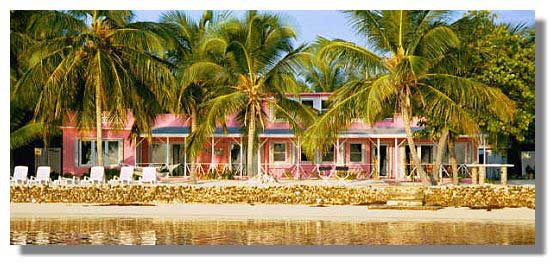
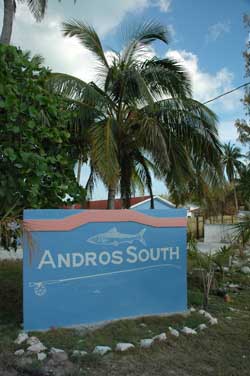
    Past trips to Andros South (formerly the Bonefish Bay Club) have made me a bit wary of recommending it to my clients. Having come under new management and ownership, though, I decided to return to see what future clients could expect. I could have not been more pleased with the changes made by Andros South’s new owner, Andrew Bennett. He has made ambitious improvements to the plumbing systems, single accommodations, landscaping, boats and other equipment. He has also added a Tiki bar and casting area beside the white sandy beach in front of the lodge.

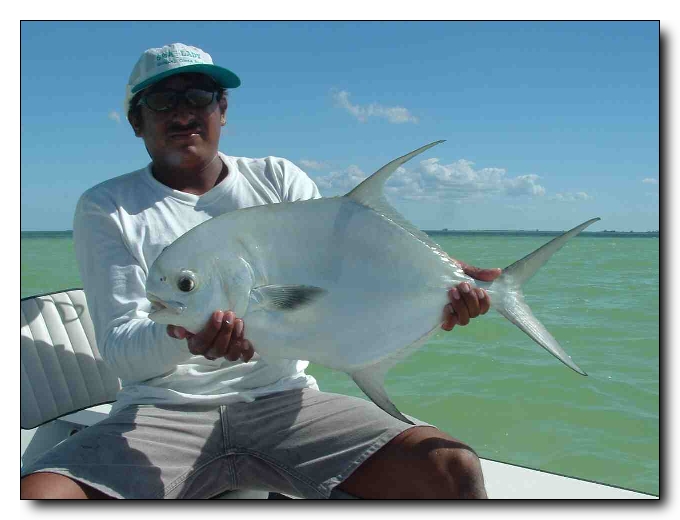
    The meals were also very good, often consisting of a fresh catch of the day reeled in by manager John Toker. Like Bair’s, Andros South uses a rotating-guide system that works well to make each guide’s specific knowledge and experienced accessible. All guides at Andros South are hardworking and extremely enthusiastic. Their are quickly becoming legends on the island due to their fishing zeal.

    Before leaving south Andros I stopped at three other lodges: Glatos, Sunrise, and Nathan’s Lodge. I would not recommend Glatos or Sunrise.

    I was somewhat impressed by Nathan’s Lodge. The atmosphere there was friendly, comfortable, and it offered real Bahamian charm. The inconsistent guiding quality, however, makes me a little hesitant about giving Nathan’s my full endorsement.

    I can confidently say, though, that the south Andros fishing lodges as a whole have improved considerably since my last visit. At Mars Bay, Bair’s and Andros South anglers will certainly find those fishing essentials that make guest return again and again. Given the right conditions, these lodges can provide an atmosphere of fishing nirvana, allowing guests to see why this area of the Bahamas has become part of fishing lore.

  • Ouzel Expeditions in Kamchatka Peninsula, Russia

    Ouzel Expeditions in Kamchatka Peninsula, Russia

    “The Best Trip We’ve Ever Had”

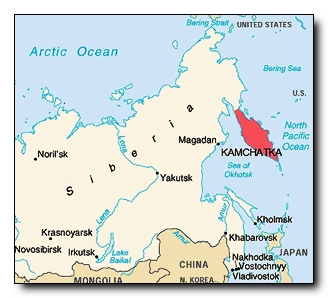
    During the past decade, Russia’s Kamchatka Peninsula has emerged as the premier destination for anglers in search of trophy rainbows and Pacific salmonids.

    It is frequently described as, “the way Alaska was 30 years ago”.  While rivers such as the Zhupanova have been highly promoted and have received the most press, these have also received the most fishing pressure, in some cases from multiple outfitters.

    But fortunately, there are many other fantastic fisheries on this 100,000 + square mile land mass, and many of these receive very little pressure.

    Ouzel Expeditions was the first American company to explore Kamchatka and the first American outfitter to bring US clients to Kamchatka in 1991.Owned and operated by Paul & Sharon Allred, Ouzel Expeditions has been outfitting quality float trip expeditions in Alaska since 1978.

    With an emphasis on personal attention,  Ouzel typically takes groups of only 6 to 8 anglers, and carries a staff including an American host/head guide, veteran Russian guides, a translator, and a kitchen staff of two.

    Ouzel has rights to fish numerous rivers on Kamchatka, including the Zhupanova.  But, it is on lesser known  rivers, where they are the sole outfitters, that Ouzel’s guests are assured they’ll be the only anglers on the entire river.

    The Rivers

    Case in point, Angler Adventures’ client Alan McRae recently returned with his party from a float trip on the Kapushka, one of the several fine rivers on which Ouzel holds the exclusive fishing rights.  The Kapushka is quite comparable to the Zhupanova in terms of size of fish, but may produce slightly better numbers.  Rainbows up to 31 inches have been taken by Ouzel guests on the Kapushka.  Alan reported no fish reaching the magic 30 inch mark, but said most of his rainbows fell in the 24 – 28 inch range.  Alan concentrated mainly on rainbows, and reported averaging 6 – 12 big bows each day.  He described these as beautifully full-bodied, well-conditioned fish, “incredibly big”!   Alan took most of his bows on top with dry flies and mouse patterns.  The rest of the group enjoyed the diversity, as the Kapushka was enjoying an incredible run of pink salmon and hard fighting arctic char, along with the world-class rainbow fishing.

    Alan commented that the food, the comfort and amenities of the tent camps, and the professionalism, affability and responsiveness of head guide, Todd Hiibner and his entire staff, far exceeded their expectations.    He added that his group has traveled and fished extensively for the past 20 + years, and their consensus was that this was the best trip they’d ever taken!

    Besides the Kapushka, Ouzel is the sole outfitter on the Medved and the Kartuska Rivers.  The Medved is another producer of 30-inch bows, while the Kartuska rainbows run between 20 – 28 inches, but are more numerous than on either the Kapushka or Medved.  Along with the Zhupanova and several other lesser-known rivers, they have a greater variety than most outfitters from which to choose.

    They generally rotate rivers, scheduling a week on the Medved, followed by a week on the Kapushka (which also helps keep fishing pressure down on each).   But another huge advantage over other outfitters is Ouzel’s flexibility to make last minute changes.  Should the river you are scheduled to fish “go out” with heavy rains, Ouzel will switch to another river. This is not an option with other Kamchatka outfitters – you book a week on a certain river, and if she goes out, that’s just the luck of the draw.

    The Cost

    Ouzel plans to operate 10-weeks of float trips for parties of 6 to 8 anglers in 2005.   The 2005 rate for the above itinerary is $4,100 + $150 visa processing = $4,250 US per person.  Included in this cost are: Visa support & processing, interpreters, and licenses, all transportation in Russia, helicopter flights, buses, ground transportation, & city tours.  On the river, Sotar rafts, waterproof gear bags and camera bags, a large kitchen tent, North Face sleeping tents, sleeping bags, pads, and pillows are provided.

    Each trip is staffed by Russian guides, cooks, a Russian interpreter and one American guide.
    Not included are: airfare to and overnight in Anchorage; airfare on Mavial / Magadan Airlines, Anchorage to Petropavalovsk (estimated at $1,375 round trip for 2005); meals and hotel costs in Petropavalovsk ($150 per person per night); gratuities; fishing tackle and flies.

    Rebookings with Ouzel Outfitters usually runs at above 70%, so available space is limited.  If you would like to inquire about space or receive information on the 2005 program, please contact Angler Adventures:

  • 56 Permit in ONE WEEK in the Punta Pajaros Cay, Mexico

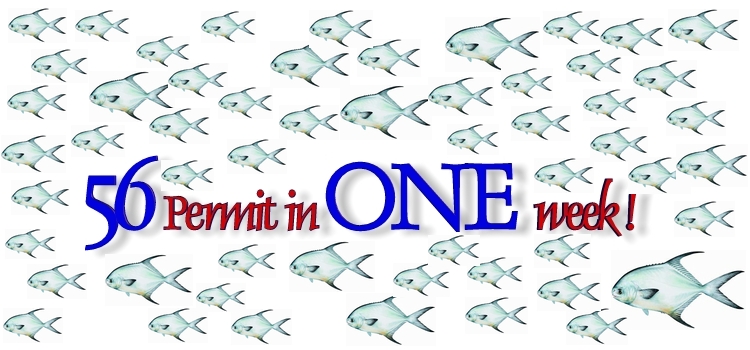
    56 Permit in ONE WEEK in the Punta Pajaros Cay, Mexico

    Casa Blanca and sister lodge, Playa Blanca are both located on the cay of Punta Pajaros, 100 miles south of Cancun in Mexico’s Yucatan Peninsula. Casa Blanca fishes the legendary Ascension Bay, just north of the cay, while Playa Blanca, 12 miles to the south, fishes Laguna Santa Rosa and Espiritu Santo Bay.

    Both bays, located within the 1.3 million acres Sian Ka’an Biosphere reserve, are considered among the world’s top flats fishing destinations for bonefish, tarpon, permit and snook.

    The lodges typically open the 1st or 2nd week in October, and excepting 2-week periods over Christmas and Easter, are open until the middle of June.  The common perception is the best time to fish these areas is March, April & May, and this is when high season rates apply.

    While the spring months are excellent, I think many anglers are missing what may be an even more productive season to fish AB & ES.   For years I’ve encouraged anglers to fish Ascension Bay or Espiritu Santo the normally lightly booked October/December season.  I’ve had the pleasure of fishing Ascension Bay a number of times, and five of these trips have been during the months of October or November.  I’ve had good to outstanding fishing during each of these fall trips.

    Doc Foster
    There are a number of reasons I like the fall fishery.  First, most of the lodges close or are very lightly booked through the rainy season, early June through early October, and this lack of pressure promotes “happier” and less spooky fish on the flats.  The migratory tarpon start showing up in late April and can be found in good numbers through November.  The snook fishing seems to be at it’s best during the fall, as soon as the water clears.  Water temperatures during the fall are usually at a consistent optimum, particularly for permit, which take flies better in warmer temperatures.  And lastly, the rates for the fall season are considerably lower than during high season.  Why wouldn’t anyone go in the fall?

    Angler Adventures – Doug Schlink
    To illustrate just how good the fishing can be during the fall, witness “The Week” of November 6th at Casa Blanca and Playa Blanca Lodges.  I was privileged to accompany a group of clients and participate in the all time record-breaking week for both permit on fly and grand slams!

    While a group from a Colorado Fly Shop headed 12 miles south to fish to Playa Blanca, I joined the Streams of Dreams Fly Shop group at Casa Blanca. Casa Blanca normally accommodates 20-22, but as mentioned, the fall is frequently lightly booked, and our party of 8 had the entire camp to ourselves.

    The week got off to a good start, with everyone getting numerous shots and 3 permit landed that first Sunday.  Among the anglers to score on day 1 was “Doc” Ralph Cifaldi, using his own variant crab pattern with a long tail of dyed polar bear.  Day 2 was the banner day when the group tallied 10 permit landed.  But Ralph was the top rod scoring a “Hat Trick” – three permit on the fly, on his crab pattern!

    Day 3 was nearly as good with 8 permit landed by the group.  And it was the good Doctor’s good fortune padding the count again, as he landed another 3 permit including one over 20 pounds, on his same crab pattern!!    Ralph now had 7 permit on fly in 3 days!  We began to think there might be something to this fly and Ralph stayed up late that night at the vice and generously gave each of us one the next morning!   Ralph’s fly proved to be a charm for me when on day 4 when I used it to hook and land a beast that tipped the scales at 32 pounds.

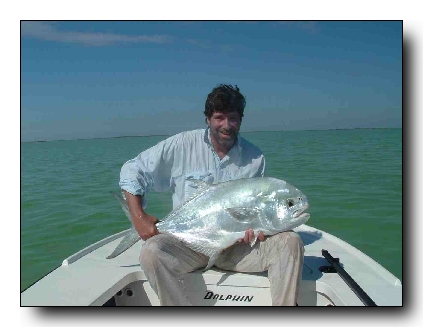
    By weeks end, 8 anglers tallied 35 permit landed, 5 of which bested the 20 pound mark.  Numerous tarpon, bones and a few snook were landed by the group.  Dr. Ralph’s magic crab fly accounted for 17 of the 35 permit!    I’ll be happy to provide the pattern recipe on request.

    On our last morning, the truck arrived with the group from Playa Blanca who’d had similar luck down south in Espiritu Santo scoring numerous grand slams and adding another 21 fly caught permit, to bring the total to 56 permit and 10 Grand Slams landed in 6 days on Punta Pajaros, a new all time record for the island.

  • The Complete Fly Fisher lodge in Montana: Fish The Big Hole River

    The Complete Fly Fisher lodge in Montana: Fish The Big Hole River

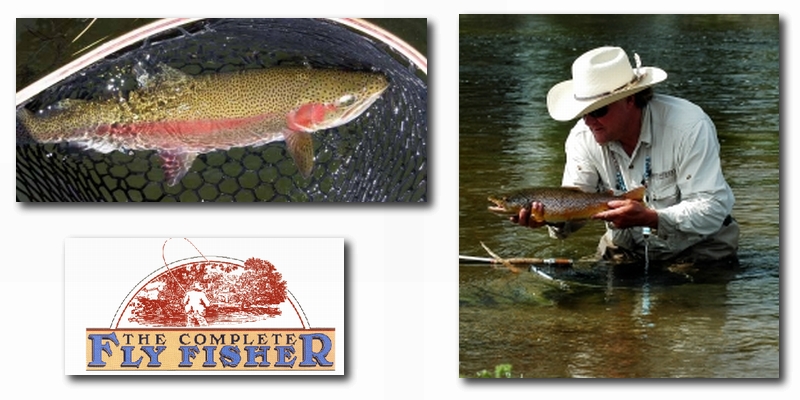
    The Complete Fly Fisher is one of Montana’s finest fishing lodges and is ideally situated directly on the Big Hole River.  A maximum of 14 guests are accommodated in six spacious cottages and a master suite in the main lodge.

    From the beginning of August, well in to the latter half of the month, the pine forests that line some of SW Montana’s finest trout streams, particularly the Big Hole, stir with the emergence of the Spruce Bud Moth.  First, the moth larvae develop into nickel sized winged adults. Shortly after, the moths perform their mating ritual over the water.

    On the Big Hole, as well as other nearby rivers, the guides love to target this unique “hatch”.

    Once the overnight chill is burned off by the morning sun, the moths become active, making their way down from the pines  into the river.

    The trout react immediately slipping into feeding lanes. Few moths make it very far before being sucked in from the surface.

    The meaty moths bring some of the biggest trout to the surface. The dry fly fishing can be spectacular!

    The Big Hole has over 100 miles of fishable water.  While there is very good fishing near the lodge, most guests choose to float the river, stopping to wade the productive pools. The scenery is magnificent as you drift through cattle ranches and canyons.  The Big Hole is one of few western rivers that, in addition to brown, rainbow, and brook trout, holds cutthroat trout and grayling.

    In addition to the Big Hole and it’s tributary, the Wise River, a private spring creek runs through the Complete Fly Fisher property that consists of one mile of stream and two ponds.

    The CFF guides have developed fish fooling moth flies and they know the runs where this phenomenon happens. Casting to trout rising for naturals is one of fly fishing’s ultimate treats.  Having a well planned attack to intersect this incredible opportunity is even better.

    The CFF has cared for anglers from across the globe for thirty five years with one objective in mind; to exceed their guests expectations.

    The Complete Fly Fisher is an ideal place for couples, families, or groups composed of expert and novice fly fishermen. Experts will be challenged by the Big Hole’s browns.  Novices will return from a week’s outing with a feeling of accomplishment, having been taught casting skills by competent instructors.  The CFF staff teaches people to fish while they’re fishing.

  • Fishing Montana at Five Rivers Lodge and The Complete Fly Fisher

    A couple of years ago I made my first visit to Montana.  The first day on the water, 30 Trout!!!!!  I had never nymphed in my life and by the end of the first hour I was a pro! Not only was I nymphing, I was dry fly fishing like never before.

    Since then, I have convinced many saltwater anglers to fill out their summer calendar with a trip to the mountains and Blue Skies of Montana.

    Whether you are new to freshwater, or you have lots of experience, Montana offers “action”, as well as technical match-the-hatch fishing. Montana is also a great adventure destination, whether you are a couple, single, family or group.

    There are two lodges that have something for everyone and are my favorites.

    Five Rivers Lodge is in an ideal location, Dillon, Montana.  Some of the “best kept secrets” are in this area.  Five Rivers offers excellent fishing on the Beaverhead, (Upper and Lower and more private access points were added this year), the Madison (Rainbows are terrific on this river), the Ruby, Big Hole, the Jefferson and several private water access points including, “The McCoy”.

    Five Rivers has a host of guides that are experienced, friendly, and professional and are very good about providing instruction as well.

    Jay Burgin and Mary Jacques (your host and hostess) are simply terrific. They  make you feel at home, keep the food
    and wine flowing, and offer accommodations with all amenities.  You will love their warmth and hospitality, and enjoy the magnificent sunsets while dining on the delicious meals they provide.

    Five Rivers has something for everyone!   Jay and Mary are more than happy to assist with other arrangements as well, horseback riding, day trips and picnics.

    The “Good News” is it is not too late to book for 2003, and this year is shaping up to be one of the best years in many years, with 90 percent of normal snow pack.  If 2003 is just not possible, now is the time to secure your week for 2004. Fiver Rivers will honor all 2003 rates for clients deposited by September of 2003.

    During my stay at Five Rivers, I was able to experience, “Vinter’s Week” and due to it’s popularity it is repeated every year.   World Class Wines and World Class Fly Fishing at their finest.  The dates for  “Vinter’s Week” are noted below and please check out our web site at  www.www.angleradventures.com/fiverivers for current rates.


    10 MayRoger Riccardi of Gallo of Sonoma – California14 JulyMarc Mondavi of Charles Krug – California11 AugustJohn Dingethal of Sandhill – Washington / Alex Schug of Shug Carneros – California1 SeptemberJerry Bookwalter of Bookwatler – Washington


    Complete Fly Fisher (CFF)

    During my visit to Montana, I made a stop at the The Complete Fly Fisher located on the banks of the Big Hole River in Montana. The lodge was full of very happy guests some of whom were learning the art of fly fishing for the first time.  The guides at the CFF love to teach, whether its converting a beginner into a devote, or showing an experienced angler how to double haul.  The lodge, situated on the east slope of the Rocky Mountains, is located Riverside, dining is Gourmet with a full, “Water View”.

    You will never experience the beauty of the Big Hole in a picture. Even if you aren’t fishing, the scenery will absolutely overwhelm you.  For me, it was not only  beautiful, but spiritually moving.  The terrific fishing was a bonus.

    Some of my favorite weeks in Montana are late June, through July when the weather is warm, water levels are up and the dry fly activity can be outstanding.

    I asked the guides at the Complete Fly Fisher what their favorite time is, and most of them agreed, the last 3 weeks of September to the first two weeks of October.

    The fishing can be superb, many of the tourists have gone home and the fall
    colors are spectacular.   Many anglers choose their dates according to what’s hatching, such as the Salmon Fly Hatch on “Rock Creek” in early June to July, or the  “Hoppers” in August.  For more information on the hatch schedules, dates of availability and rates please go to:
    https://www.angleradventures.com/complete

    The CFF also hosts a variety of activities for those that want to take in all that Montana has to offer. Guided day tours are tailored to fit your interests – be it wildflowers, native uses of plants, birds, wildlife or historical sites.  Other activities include Horseback Riding, High Country Discovery Tours with a wide range of natural history activities, especially designed for children. There’s something for everyone!

    Montana is an awesome adventure, for fishers, non-fishers, family and friends, and now may be the best time to get historically low airfares.


    For more information, please contact Judy S. Hall at Angler Adventures by email (judy@angleradventures.com) or phone (800-628-1447 in the US, 860-434-9624 internationally). I look forward to hearing from you.

    Best Fishes!
    Judy S. Hall
    Angler Adventures

  • “Pancake Paradise” by Mark B. Hatter from the 2003 April/May issue of Fly Fishing in Salt Water Magazine

    Pancake Paradise
    Now Serving Pez Raton for Your Summer Angling Appetite

    By Mark B. Hatter

    There is an atoll on the southern rim of the Caribbean that serves up a hearty dish of angling for fly fishers with a hunger for what the Spanish call pez raton.  The Spanish name for this “high order” delicacy might elude you, but the English name certainly won’t.  I’m talking of course, about bonefish and the bistro that serves this specialty delivers it on the largest platter of “pancakes” you’ll find in the Western Hemisphere, perhaps on the planet.

    The name of this bistro is Los Roques, Venezuela and the angling fare is served on the famous Pancake Flats that are sprinkled throughout the center of this atoll like blueberries on the real breakfast dish.  Perhaps the most extraordinary thing about this cafe is that it serves a healthy helping of pez raton all day long, every day, 365 days a year …even during the summer doldrums.

    Last summer I was certainly in the mood for a hearty serving of bonefish somewhere.  I was, however, not expecting to find much in the way of opportunities knowing the affects of summer heat on most Caribbean locations, that is until I conversed with Doug Schlink, of Angler Adventures, who virtually guaranteed superlative bonefishing on the Pancake Flats of Los Roques.

    Naturally, I was skeptical. “Bonefish in July, when the midday flats at many Caribbean locations can be hot enough to poach an egg?”  I challenged.  But Schlink appealed to my marine biology background using science to win his argument.

    As Schlink explained, there is solid science behind Los Roques’ ability to deliver bonefishing as consistent during the summer heat as it is from February through September and it has everything to do with location.

    First, Los Roques is situated only 12 degrees north of the equator 80 miles off the northern coast of Venezuela. Recalling your high school biology on climate as it’s influenced by geography, you’ll remember that environments are the most stable near the equator where the sun arcs overhead in perfect 12-hour intervals, regardless of the seasons.  Consequently, Los Roques’ proximity to the equator insures that summer days are not appreciably longer than those around the winter solstice.  This translates to a stable marine environment where water temperatures change little on a seasonal scale.

    Second, Los Roques is suffused by nearly constant trade winds.

    These air currents “turn over” or replace warmer surface water heated by the sun with cooler subsurface water while oxygenating it at the same time.  Since warmer water holds less oxygen than cold water, this turnover and oxygenation affect holds surface water quality high in areas directly exposed to the wind.

    But there’s a third part to the equation that really separates Los Roques’ with its midsummer productivity from other Caribbean locations bathed by trade winds, and it has to do with the relative surface areas of the Pancakes themselves.  Picture small, evenly spaced flat-topped hills from one-half to three acres rising up from a deeper plane.  Surround these hills with just enough tropical water to cover the tops and you have the Pancake Flats. The small nature of these “lagoonal plateaus” allows the highest level of turnover from trade winds and, therefore, the optimum conditions for bonefish regardless of the time of day or year.

    In short, it’s the perfect ecology of Los Roques that provides fly fishers exceptional opportunities at significant numbers of bonefish daily.  I couldn’t disregard the statistics Schlink defined as expectations for anglers over the course of a four-day trip where it’s not uncommon for anglers to hook upward of sixty or more bonefish! And, while most fish average around four pounds, there are plenty of bones in the eight to ten pound range to keep the adrenaline rushing.

    I’ve always wanted to fish Los Roques and Schlink provided about as solid an argument as one might expect for a midsummer booking.

    So, long time angling buddy Cliff Parsons and I decided to make our reservations for Café Los Roques to order up a tall stack of pez raton, a la Pancakes.

    Schlink booked us with SightCast, one of only two outfitters operating in Los Roques.  SightCast’s owner-operator, Chris Yrazabal, operates three 28-foot panga-style boats that serve as efficient water taxis to and from the Pancake Flats.  All of the fishing is via wading and the flats are firm and easy to navigate.  While I’ve gone barefoot on sand-bottomed flats in other places in the Caribbean, wading boots are required in Los Roques to protect your feet from the crushed coral, which constitutes much of the flat.

    The typical day begins at 7:30 AM where, after a hearty breakfast, you walk the few feet from your beach front room to load your gear in the boat.  Yrazabal’s protocol is a pair of anglers to a guide and boat; an arrangement that insures only two of you will be on a given Pancake Flat at a time.  Generally, you will trade off fishing one on one with the guide as you alternate flats.  And while this arrangement allows you to match your skills against some of the best eyes in the Caribbean when you wade alone, I can assure you that Yrazabal and his guides will spot fish you’d never see.

    The SightCast team has extensive knowledge of each of the over 300 Pancake Flats in the lagoon.  Each flat is unique and slightly different in depth and composition from the next.  The variability is subtle, but having been revealed to Yrazabal during his formative years as a guide working Los Roques, he has passed this experience on to his crew placing them well down the learning curve.

    The result is a prescribed fishing pattern of a specific set of Pancakes that are targeted depending on the tide.

    The optimum fishing depth is between ankle and shin deep with rising tides providing your best opportunity to find Pancake bonefish.  Actually, you don’t find bonefish, because they are on every flat; you hunt them with the help of your guide.

    Water depth is critical and Yrazabal’s “routes” encompass flats in selected regions of the lagoon that are fished over the course of several days as the tide becomes later on each cycle.  In four days of fishing, you will likely never hit the same Pancake twice.  His pinpoint timing is evident when your helmsman cuts the outboard well above a flat and coasts downwind to the drop off point where dozens of dorsal fins and tails flash like cutlery in the sun.

    Bonefish feed into the current and the trade winds provide constant directional “current” moving surface water as they blow from east to west.  While the words “trade wind” can sometimes rattle the most experienced fly fisher, you’ll find that dealing with the wind is not difficult.  In fact, the wind can actually aid the angler suffering “distance deficit syndrome.” And, with the fish moving into the general direction of the current, the wind will always be at your back; upwind casting is never required.

    If you allow the wind to “help” your cast by opening up your loop a little on the forward stroke, extra distance can be gained as the wind carries your fly line.  Don’t forget that the wind also helps mask you from the your high strung quarry.

    Los Roques bonefish feed madly, almost recklessly, on a flooding tide and often move over the flat in waves allowing you to stand and fish the same spot for an hour or more.  Parsons and I had several occasions where the fish poured through a particular flat and we released as many as six fish apiece without moving more than a meter in any direction.

    The casual observer couldn’t tell the difference between rising and falling water, it all seems to look the same.  However, Yrazabal and his guides know, and so do the fish.  As long as the tide is rising, even if it’s 12 noon, there will be a phenomenal push of aggressive fish eager to take your fly as they move onto the flats to feed.

    For whatever reason, the fishing becomes more difficult when the tide begins to fall.  Although still found in substantial numbers on the flats, Los Roques bonefish get coy and begin to play games with you on outgoing water.  They can be tailing, just as they did when the tide was rushing in, however, they are definitely more difficult to fool.  But I think you’ll enjoy the respite from easy fishing and will take great pleasure, as did Parsons and I, earning bones on the reciprocal tide.

    While SightCast employs several excellent guides, during our trip we fished exclusively with Yrazabal and Cayito.  Both Yrazabal’s and Cayito possess superb guiding skills but Cayito displays a rare sixth sense for locating skulking bonefish.  He can feel the presence of invisible bonefish like some can sense an approaching storm in a rheumatic limb.  In short, he sees the unseen.  And, although he speaks little English, his subtle sign language is universal.

    One afternoon, camera in hand, I followed Parsons and Cayito as they stalked insolent bones on a falling tide.  We slowly moved in parallel until Cayito stopped and raised his left hand, extending an open palm forward signaling; bonefish are near.  I watched as Parsons craned his head like a wading bird, triangulating on its dinner, but finding nothing.  Like Parsons, I too, of course, saw nothing.

    Never mind that there were more than a dozen bones visible to even Parsons and me over a sandy depression another 200 feet in front of us.  Cayito’s supernatural ability had been activated and he would not let closer singles get away undetected.  But consider his approach for a moment and you will find merit; blowing out unseen fish tends to make visible bonefish in the vicinity edgy.

    We can’t see the fish so we watch Cayito, awaiting his next signal.  Then, with his arm still extended he flicks his first two digits in a manner one would use to brush lint from a shirtsleeve.  We read and comprehend:  the lurking bonefish has moved off, time to move on.

    But within a few steps, Cayito suddenly stops again, this time raising his left arm not quite so high and rolls the first three digits on his hand as if playing an invisible keyboard.  “Booonfish!”  He whispers to Parsons while trilling his fingers.  Parsons, once again the wading bird bobs his head back and forth as I’m thinking to myself that I can’t see the damn fish either!

    Cayito crouches, using his entire arm to point in the direction of the sighting. “Booonfish!” he utters again. “Cast, short!”  He is now raising and lowering his arm in the direction of the invisible like a railroad-crossing gate.  “Cast!” he says again, this time with added urgency.  “Cast at what!  Cast Where?”  I can hear Cliff’s frustration grow.

    Then, the phantom bonefish turned broadside revealing its position 50 feet in front of Parsons and me, finally belaying its existence.  Cliff and I throw each other a quick look, we know what the other is thinking: Damn! We’re marveling, this guy is good!

    Punching a quick back cast, Parsons slows his forward stroke letting the breeze unfurl his fly line and crab imitation just short of the target.  The fly lands with a gentle “spliff” in front of the bonefish now cruising slowly up current.  “Streeep, streeep, stop…streeep, stop…streeep, streeep!” Cayito coaches Parsons as the bonefish follows the fly with apparent ambivalence.  Then, somewhere in the recesses of the bone’s primitive brain, Pavlovian instinct supplants the falling tide psyche and it rushes the fly, eating it on the seventh “streeep.”

    In a flourish of splashes and rooster tails arcing off Parson’s racing fly line, the bonefish does exactly what bonefish do, run like hell!  And in its wake, scores of other fish explode in primal fear.  Within a matter of seconds, the placid flat is completely drained of all manners of swimming creatures.Eventually, Parsons adroitly brakes the bone before it can follow the balance of its clan off the edge of the flat to the safety of deeper water.  He begins to gain purchase in a battle he will eventually win and I’m already thinking of exchanging my camera for my fly rod, but not on this flat, it has been swept clean.  No matter though, the tide will change within the hour and there’s always another Pancake Flat just down wind.

  • Salmon Fishing in Iceland

    Near the top of every flyrodder’s wish list is a trip to the mystical land of fire and ice, Iceland.   Each summer, anglers from around the globe are drawn to Iceland’s dramatic landscape and nearly a hundred crystalline rivers with fantastic runs of Atlantic salmon.

    Unlike many other salmon venues, Iceland’s rivers have remained consistently productive, with annual catch rates equal to those recorded 25 – 30 years ago.  This is due largely to strict river management policies restricting the number of “rods” each individual river is capable of supporting.  With the implementation of newer conservation measures such as catch and release and fly-only on many rivers, many expect the fishing will be even better in the very near future.

    Easy to get to and closer than many Americans realize (just a 4 ½ hour non-stop flight from New York or Boston), Iceland attracts more and more anglers from the U.S. each season.  Through our longtime affiliation with Iceland’s premier outfitter, Angling Club Lax-á, Angler Adventures is pleased to offer prime weeks on many of Iceland’s very best salmon rivers.

    Miðfjarðará

    International anglers have fished this jewel of the north coast for over 100 years.  Midfjardara offers over 60 miles of diverse water types, with over 200 pools on her 4 branches, and all within a 10 mile radius of the lodge!  Midfjardara is ideal for the angler who enjoys big fish in small to medium pools, single-handed rods, floating lines and small flies.  And if you’re a devotee of the riffling hitch, there’s no finer hitch water in the world!
    Midfjardara is one of Iceland’s most beautiful salmon rivers featuring gin-clear pools, spectacular scenery, and an abundance of large, two sea winter fish.  This combined with a first class lodge and gourmet dining makes the Midfjardara a perennial favorite.  I’ve met both American and European guests who’ve been fishing the river for over 20 years.

    The upper branches, Vestura, Nupsa and Austura offer every conceivable type of water with classic pools, pocket water, runs, falls pools and eddies, all of which hold salmon.  The lower stretch of the main river is more pastoral with wider, more conventional pools.   One of the highlights for many is fishing the spectacular Canyon on the Austura branch. Starting at the top, it takes the better part of a 6-hour fishing session to work your way to the bottom.  A stealthy approach and delicate presentations are absolutely essential for success on this water.  In many pools, your guide can climb to a “spotters” position where he can observe the salmon’s reactions to the fly.   It can be a bit unnerving when he says, “here he comes – HE’S A BIG ONE!”  It’s some of the most exciting and intriguing salmon fishing I’ve ever done.

    Like many of the north coast rivers, the catch on the Midfjardara is cyclical, and judging from historical statistics, Midfjardara may be due for a big season in 2003.  During good years, Midfjardara can produce annual catches of over 2000 fish and has a 25-year average of over 1200 fish to 10 rods.  Thanks to voluntary catch and release and the adoption of “fly only” from early July to the end of the season, the river has had excellent spawning escapement in recent seasons.   Coupled with extremely high numbers of parr in the river the past several years, biologists are predicting big seasons for 2003 and several years to come.

    Prime time on Midfjardara is from early-July to mid-August and there are still a few vacancies during peak weeks.  Please call for availability.

    Blanda

    This is the sleeper!  Few people have even heard of the Blanda – primarily because it historically has been fished only by Icelanders.  Last year was only the second season Blanda was offered on the international market.  But now, the word is out and spreading fast!

    Blanda was long written off by visiting international anglers due to the glacial feed that discolored the river rendering it unfishable with fly.  It was left to “locals” to fish with spinning gear.  However, the Blondous Reservoir, built in the late 80’s, now acts as a giant settling pond for this glacial tributary, and the river flows clear throughout June, July and much of August. Depending on the amount of summer rainfall in the area, the river may remain clear until September.  I fished Blanda August 25th and 26th two years ago, and we had clear water and excellent fishing with bright two sea winter fish up to 18 pounds, and a few seatrout to boot.  But to be safe, we recommend booking prior to August 10th.

    The Blanda boasts the highest ratio of salmon to grilse of any river in Iceland, as well as one the highest average weights of around 9 pounds (grilse and salmon).  It has an unusually early run providing quality angling almost a month before other rivers, with good catches recorded from the June 1 opening day.   This 8 rod river also produces impressive numbers with a 25 year annual average catch of around 1100, and good years can see catches soar to nearly 2000 salmon.  This is particularly impressive given most of June is fished by only 4-rods on the lower beat below the falls.  As temperatures warm, fish ascend the falls in late June and an additional 4 rods commence on Beat 2 above the falls.

    Since opening to the international market, Blanda has benefited from widely practiced catch and release as well as fly only management.  There is a counting facility on the fish ladder on the falls at Svarta, the main tributary for spawning, and biologists have estimated the escapement at over 2500 salmon above the falls in 2002, the best ever seen.  This, of course, bodes extremely well for some fantastic fishing a few years down the road.

    Blanda is a big river and is best covered with double-handed rods.  Early June fishing may require sink tips and weighted tube flies, but typically by mid to late June, floating lines and small flies become the method of choice.

    Prime time is June 15th – August 10th and there are still a few open rods during this time.     Blanda can be easily combined with Midfjardara, or especially in June, with Asum.

    Laxá in Ásum

    We are pleased to be able to offer prime weeks on the famous Laxa in Asum, considered the most exclusive and highly sought salmon river in Iceland.  This diminutive, 2-rod river is renowned for having one of the highest averages of salmon caught per rod per day in the world. Double-digit per-rod daily catches are not uncommon, especially during prime time, and incredible catches of over 30 salmon per rod per day have been achieved.  Under Lax-a management, the river is now fly only for the entire season, which has been shortened to create a sanctuary period prior to autumn spawning.

    Asum is a relatively small river, easily covered with a light, single handed-rod.  Floating lines and small flies are the norm, even in early season.  Uncharacteristic of north coast rivers, Asum is primarily a grilse river with the average size fish 6.5 pounds.  But what they lack in size, they more than make up for in numbers.  Many regulars routinely fish 6 or 7 weight single-handers.

    Asum is the most expensive river in Iceland, but despite the high price, is usually sold out year after year.   While prime time is mid-July through mid-August, it is such a productive river that “shoulder” periods are extremely worthwhile.  There are still a few open dates, and it may be possible to combine a few days on Asum with time on either Blanda or Midfjardara.

    Hafralónsá

    The beautiful Hafralonsa is located in the remote northeast corner, and is Iceland’s northern most salmon river.  This is a long river, with about 18 miles of fishing on 50 named pools for six rods. However, it is not a big river and most of the pools are covered easily with single-handed rods.   The pools are long, wide and strong flowing through the lower pastoral reaches. The main feature of the middle beats is a deep canyon, several kilometres in length, which contains some of the best holding pools. Some climbing with the aid of a rope is necessary to access some of the canyon pools. In the upper part of the canyon, a waterfall holds up the migration in the early season, concentrating  the fishing to this lower half of the river. As the season progresses and water temperature warms, the fish mount the falls, gaining access to the upper river. This opens up a vast array of fishing. The upper river flows through a beautiful wilderness setting and contains some of the prettiest fly water imaginable.  Hafralonsa fish respond very well to hitched flies, often in the smallest of sizes.

    Hafralonsa is not a producer of great numbers of fish.  However, it is one of Iceland’s best big fish rivers.   Two sea winter fish average 14 pounds and each year salmon in the 20 – 30 pound class are hooked.  It is best recommended for the experienced and reasonably fit angler as there is a lot of water to cover in order to find fish. For those who revel in the challenge of large fish on small flies in a remote wilderness setting, the Hafralonsa is hard to match.

    Rangá

    The Rangá has rocketed to prominence in the past 10 years.  As the result of a unique smolt rearing and releasing project, the river has transformed from a once minor salmon river to Iceland’s number one river 5 years in a row with catches that have shattered previous annual catch records. 2001 was the peak thus far with the East and West Branches combining for a total catch of nearly 6000 rod caught salmon!  The runs on both branches are comprised mainly of one sea winter grilse, but with a remarkable average size of 7 pounds (grilse of over 10 pounds have been documented on the Ranga).  However, multi sea winter fish to 27 pounds have been landed and the numbers of large salmon seems to be increasing each year.

    Problems with the timing of smolt releases in 2001,  resulted in somewhat disappointing returns in 2002.  The East and West combined for just over 2000 fish last year, still ranking it among the top 3 rivers in the country.   Biologists believe the 2002 release was extremely successful and are predicting strong returns for 2003.
    Prime time on both the East & West Ranga is July 10 – August 10.  East Ranga Lodge is almost completely sold out but a few prime spots remain open on the West Ranga.

    Other Options

    Besides the full service salmon lodges on the great rivers listed above, we also have limited access to some weeks on Laxa in Dolum, Vididalsa, Sela, Hofsa, Laxa in Kjos and other top rivers.  We also can arrange “self-catered” options, a popular concept with Europeans, on numerous rivers, and an economical option for small groups.  Iceland also offers some of the world’s best brown trout fishing!  And while I’ve yet to sample it, I plan to correct that situation next trip!

    For more information, please contact Doug Schlink at Angler Adventures by email (doug@angleradventures.com) or phone (800-628-1447 in the US, 860-434-9624 internationally).
    I look forward to hearing from you.
    Regards,
    Doug

  • Andros Island Fishing Lodges and 3 new routes to the West Side

    ANDROS REVISITED – 3 NEW ROUTES TO THE WEST SIDE

    I first visited Andros in 1982. There was one fishing lodge, Charlie’s Haven, located at Behring Point on the North Bight. I was the only angler staying at the lodge. I fished Big Wood Cay for several days, never seeing another guide or angler.

    Since that trip, I’ve been back to Andros at least a dozen times and every trip I discover something new.

    My most recent trip was in November, 2002. The “new” thing I discovered on this trip was Flamingo Cay Rod & Gun Club, the only lodge located on the unpopulated west side of Andros.

    I was the only angler staying at Flamingo Cay. I fished numerous west side flats as far north as Billy Island, never seeing another angler or guide. I waded for miles plucking off bonefish tailing in six inches of water, caught a 50 pound tarpon that ate the fly within 3 rod lengths of the boat and cast to numerous permit from 20-40 pounds.

    Flamingo Cay is located near the mouth of “The Wide Opening”. Access to the lodge is by floatplane. This location is about 100 miles from nowhere. I was expecting “rustic”, instead, I found an oasis, with every comfort imaginable, including outstanding food, Hell’s Bay skiffs, an airboat and several top notch guides. For anyone who wants to experience Andros like it was 50 years ago, this place is a find.

    I fished the remote southwest side of Andros extensively in the early 1990’s, when Stanley Bain first opened his Grassy Cays Camp. Building that lodge was an incredible feat. The fishing was even more remarkable, endless wading for humongous schools of bones in shallow water. Tragically, Stanley Bain disappeared in 1995 and with his departure the lodge fell to ruin in a few years.

    Interestingly, this void is now being filled by the two lodges based in Kemp’s Bay, South Andros, Bair Bahama Guest House (now Bair’s Lodge) and Bonefish Bay Camp (now Andros South). The South Andros guides have found a way to travel by skiff from the east side to the west side of South Andros through the protected waters of Little Creek.

    The single route to the southwest side used to be a weather dependent one hour boat ride down the east coast. Breaching the west side through Little Creek opens up a huge new chunk of bonefishing habitat and eliminates the often pounding boat ride down the east side when the wind is up.

    I’m happy to report that fishing on the southwest flats of Andros is just as incredible today as it was in 1990 and should stay that way for years to come. With just two lodges fishing these vast southern flats, there is little threat of over fishing. You will find slightly warier fish closer to these lodges, but with so much real estate no one spot gets pounded.

    Also noteworthy is the pending change in management at Bonefish Bay Camp (now Andros South). Operated for the past 7 years by the Rahming family, we expect that within the next 30 days, American, JerryBottcher will have government approval to take over operation of the lodge. Bottcher has promised many improvements.

    Today, there are at least 14 fishing lodges on Andros. I’ve visited every one. Fourteen may sound like a lot, but not when you consider the size of Andros. It’s immense. And, it’s all fishable. Andros has been referred to as the “Alaska of the Bahamas.” Please view our Andros map at https://www.angleradventures.com/androsmap.html

    The highest concentration of lodges exists in the Behring Point, Cargill Creek area where Charlie’s Haven got started. There is Ivan Neymour’s, Tranquility Hill Lodge right on the North Bight. Rupert Leadon’s, Andros Island Bonefish Club (AIBC) located a mile or so away at the mouth of Cargill Creek. Next to AIBC is Creekside, formerly Cargill Creek Lodge. Across Cargill Creek is two time Bahamian National Bonefishing Champion Simon Bain’s brand new Bonefish Bay Club.

    From these 4 lodges you have easy access to both the Middle and North Bights, and the excellent wading flats on the East side. In addition, a vortex of guiding talent lives and works in these two neighborhoods, guides such as Andy Smith, Simon Bain, Charlie Neymour, Ricardo Mackey, Nick Leadon, Glister Wallace, Danny Newbold, Ivan Neymour, Dwayne Neymour and many more.

    About 20 minutes southwest is Mangrove Cay, located on the east side of the Middle Bight. Mangrove Cay is an island unto itself, with its own airport. The spectacular Mangrove Cay Club was built in 2000 by Liz and Allie Bain, who have turned Mangrove Cay Club into one of the best run lodges in the Bahamas in a matter of a few years.

    In North Andros, Prescott Smith’s Stafford Creek Lodge continues to fish local east side flats and the Joulter Cays, but more and more is trailering to a small fishing village on northwest Andros, called Red Bays, and running south to fish. Here are more flats that have not seen a “prop scar” and are home to big bonefish, permit and tarpon.

    The nearby Kamalame Cay, while offering an outstanding fishing program concentrating on east side flats and the Joulter Cays, is probably best known for having raised the bar on what anglers can expect in terms of luxury and elegance.

    More information on the lodges described above can be found on our web sites noted below. However, if you would like to discuss theses or other Bahamian lodges, don’t hesitate to call.

    Regards,
    Chip Bates