
Here’s the thing about bonefishing: the weather doesn’t just affect your comfort—it fundamentally changes how fish behave, what they can see, and how you need to approach them. Whether you’re dealing with glass-flat calm conditions that make every shadow a warning signal, or cloudy, rainy days that let you get closer but hide the fish from view, understanding how to adapt your technique can turn a frustrating day into an exceptional one.
The difference between a skunked day and a banner day often comes down to one simple question: are you fishing the conditions, or are you fishing the way you always fish?
Super Calm Conditions: When There’s Nothing to Break Up the Shadow

Picture this: the water’s like glass. Not a ripple. Not a breath of wind. It’s beautiful, but for bonefish, it’s also terrifying.
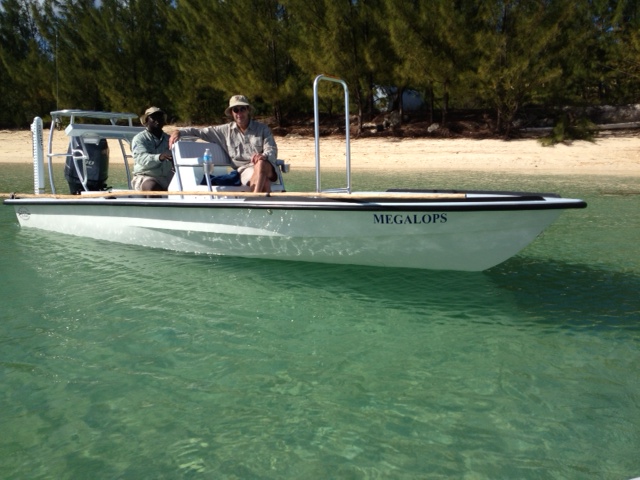
When it’s super calm and there’s nothing to break up their shadow, everything that moves in the air becomes a warning sign. Fish get spooky—like, really spooky. They get super nervous and they’ll blow up at the smallest movement. Even the light reflecting off your leader can send them running. Garon Williamson at Grey’s Point Inn on Acklins was guiding Doug Schlink on one of these slick days. Garon made sure that they walked carefully and slowly, stopping at least 100 feet ahead spotted fish because “they’ll fell the energy in the water”. Even the push water from your footsteps can be enough to send a fish in the opposite direction.
The Challenge
In these conditions, bonefish are operating at maximum alert. Every shadow, every movement in the air above them, every reflection signals danger. They become extremely wary and difficult to approach. It’s like trying to sneak up on someone who’s already looking for you.
The problem isn’t that the fish aren’t there—they are. The problem is that they’re seeing everything, and they’re not in the mood to take chances.
Adapting Your Approach
When the water’s dead calm, you need to change your game:
- Move slowly and deliberately—No sudden movements. No rushing. Every step, every cast needs to be intentional.
- Pay extra attention to your shadow—Your shadow is a dead giveaway. Position yourself so your shadow doesn’t fall on the fish.
- Use longer leaders—A longer leader minimizes the disturbance and keeps your fly line further from the fish. Ten-foot leaders work most of the time, but sometimes even fifteen-foot leaders aren’t enough (or are too hard to cast).
- Lighter Flies – less splash on entry and better control casting
- Consider getting out of the boat—This is huge, and we’ll get into why below.
The key here is patience. You’re not covering water quickly—you’re stalking. Every cast matters. Every step matters.
Cloudy and Rainy Conditions: When You Can Get Closer
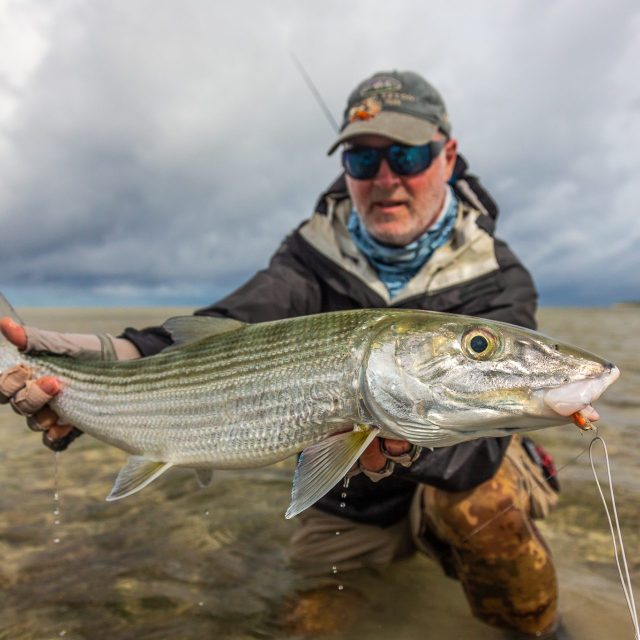
We all dread cloudy and rainy days fishing. Here’s the good news: you can typically get closer to fish because they can’t see you as well, and they don’t care about getting wet in the rain. The weather is creating all these disturbances—ripples on the water, reduced visibility, all that—but the fish still need to eat. So they’re still there, still feeding.
The Opportunity
This is where cloudy and rainy conditions become your friend:
- Fish are still feeding—They need to eat regardless of the weather
- Your approach is less visible—The conditions are working in your favor
- Their sensors are somewhat dulled—The reduced light and surface disturbance make them less alert
It’s like nature is giving you a bit of cover. Use it.
The Challenge
But here’s the catch: you can’t see them either. Their sensors are dull, but you also don’t have the typical sight-fishing advantages you’d have on a bright, clear day. You’re not going to spot that perfect shadow or see that fish cruising in the distance.
What You’re Looking For: Changes
This is crucial: you change what you’re looking for.
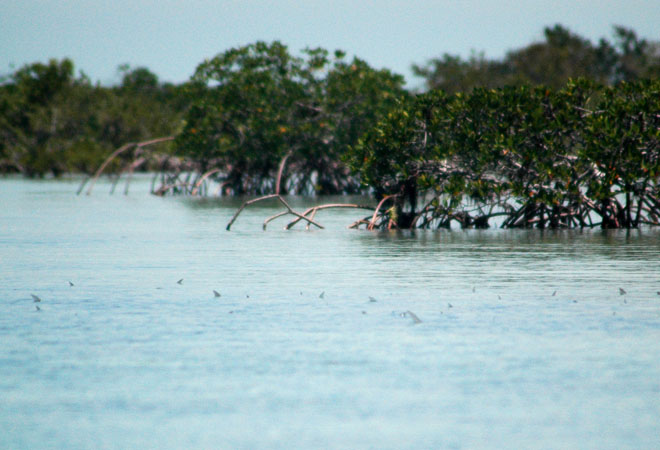
You’re not going to see a bonefish’s shadow when it’s cloudy or raining. That’s not happening. But you might still see their tails sticking up out of the water. You might see dorsal fins breaking the surface. You might see wakes, or nervous water. They might also show up like they appeared out of nowhere.
So you shift your focus. Instead of looking for shadows and shapes, you’re looking for:
- Tails—Bonefish tails sticking up out of the water as they feed
- Dorsal fins—Breaking the surface as fish move through shallow water
- Wakes—The V-shaped wake a fish creates as it moves
- Nervous Water — The choppy surface of the water that’s moving differently, often opposite, of the surrounding surface movement
- Look Everywhere – Don’t just look ahead of you. Take a moment to pause and look to 7 O’clock and 4 O’clock, where fish often just “appear” when it’s hard to see.
It’s a different kind of sight fishing, but it’s still sight fishing. You’re just reading different signals.
Wading vs. Boat Fishing: When Weather Dictates Your Approach
This is where things get interesting, because the weather doesn’t just affect the fish—it affects how you and your guide might choose to target them.
Fishing from a Boat
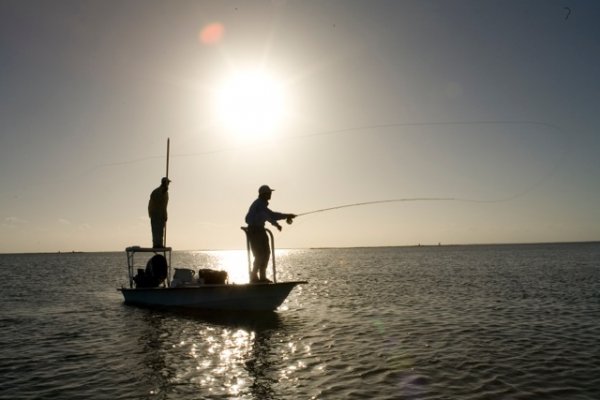
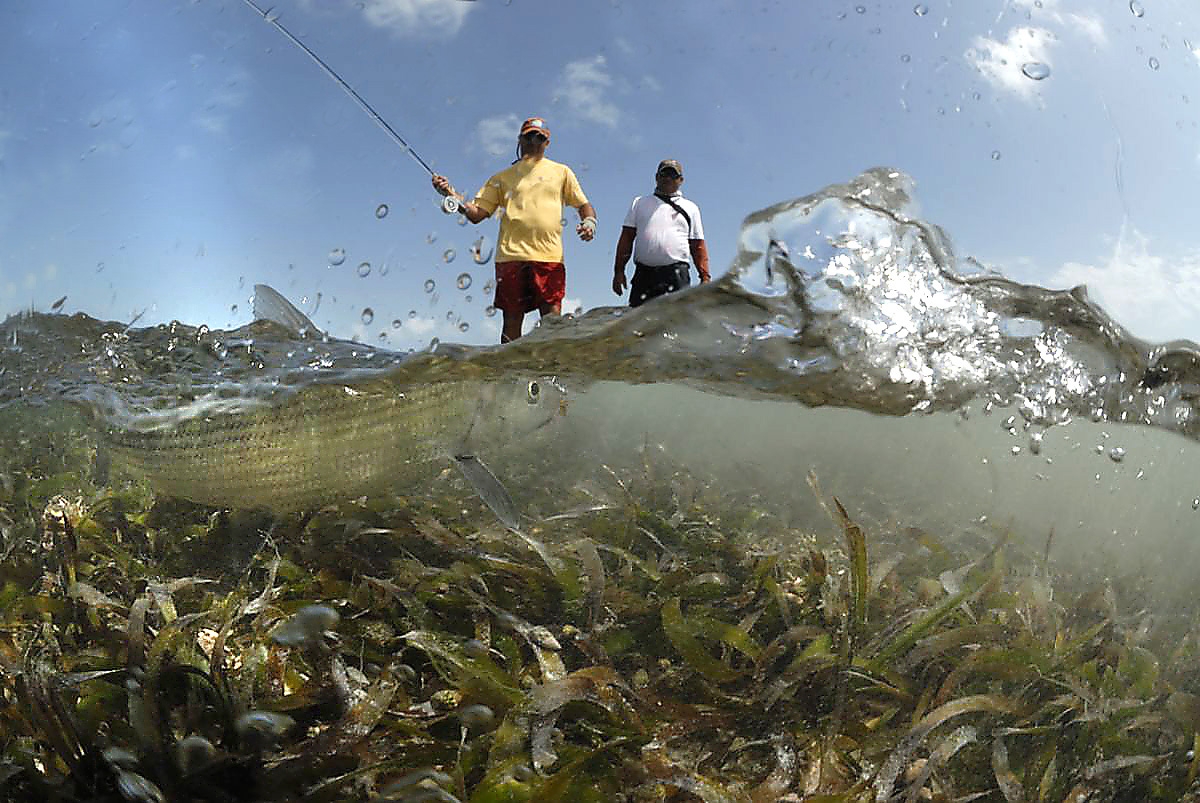
When you’re in a boat, the guide’s up on a polling platform, so he’s 10 or 12 feet in the air over the water. That height gives him a great objective angle—he can see fish from way out, spot movement, read the water. But you? You’re on the front of the boat. You only have your five and a half, maybe six foot objective angle to look for fish. So it’s a little harder to see.
Sometimes in a boat, the guide will call out the fish: “There’s a fish here. 80 feet, 11 o’clock, moving left to right. You see him?” And then: “30 feet. 25 feet.” It’s much faster. You don’t see as much—you’re relying on the guide’s eyes.
That works great when conditions are good. But when conditions are challenging, even with the better point of view, guides may not see bonefish until they’re in difficult positions, such as inside 30 feet, at 3 o r9 o’clock , or heading away. For a lot of anglers, it’s much better to wade.
Getting Out of the Boat: When Conditions Call for It
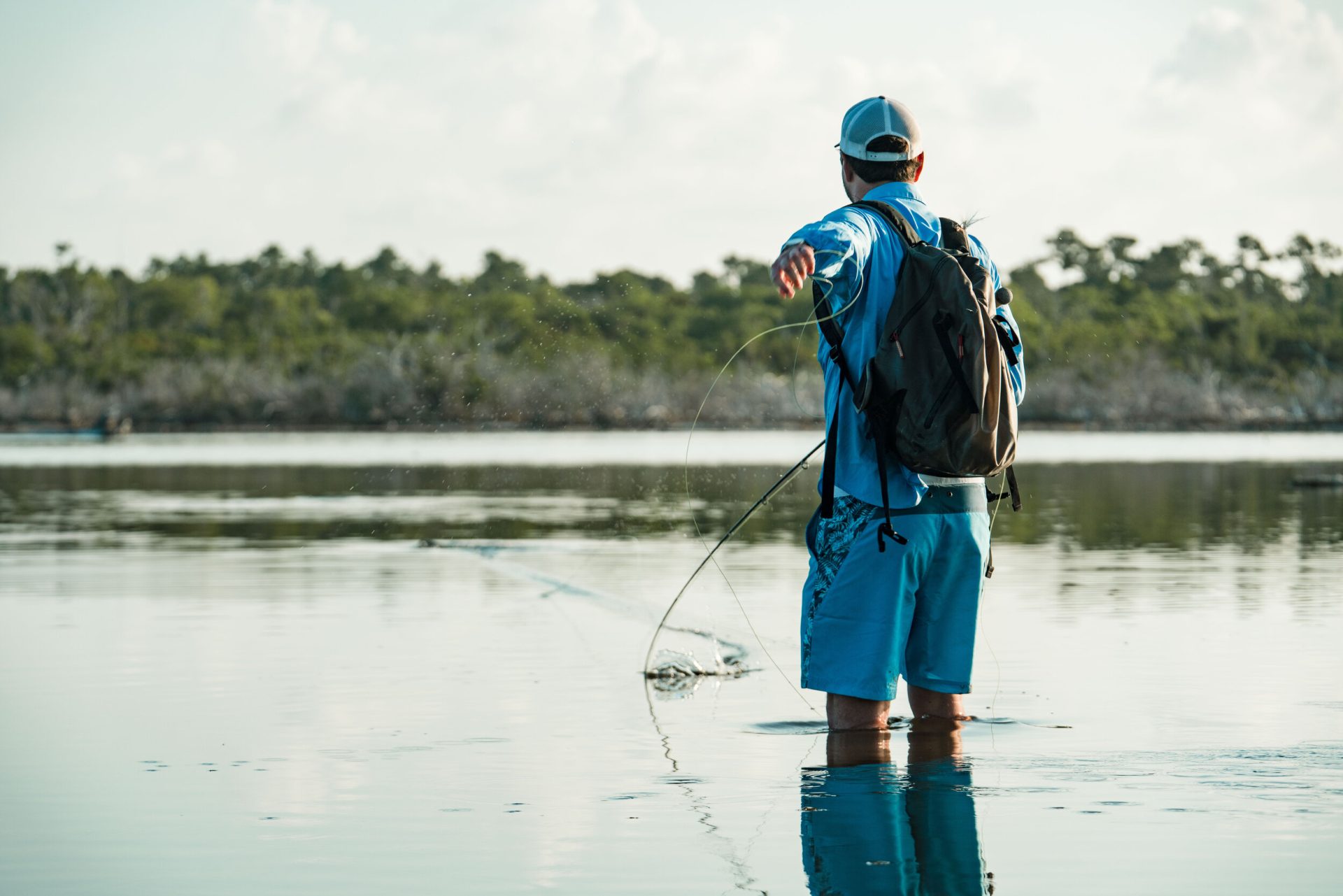
Here’s why getting out of the boat can be a game-changer:
- Everything slows down—You cover less water on foot, you don’t see as much area, but you slow down. And that’s often exactly what you need.
- You can get closer to fish—Without the boat slapping the water, without that bigger shadow, without the bigger objects pushing through the water, you can get closer without spooking them.
- Better positioning— You can slowly get yourself into position quietly. You can get low when making your presentation, sometimes getting on your knees if you have to keep a fish from spotting you. You can get into positions that just aren’t possible from a boat.
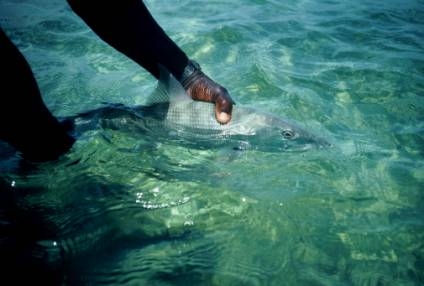
- Exceptional opportunities—You can get within 12 feet of a fish sometimes if you’re on foot. It’s exciting to have bonefish follow your fly almost to your rod tip.
For many anglers, wading is one the more exciting ways to bonefish and is they’re go to method (and how they pick their destination). When you’re wading because the weather dictates, it might be what saves the day.
It’s not about the boat being bad—boats are incredible tools and in many fisheries are the only way to be successful. It’s about matching your approach to the conditions. Sometimes the conditions call for a different approach.
Important Note
Not every destination has that option. Some fisheries are primarily boat-based, and wading isn’t practical, so it’s important to know which destinations offer wading opportunities and which are primarily boat-based fisheries. When you’re planning your trip, ask about wading options. It might be the difference between a good day and a great day.
Bonus Tip
It’s almost impossible to have an inclement weather system effect an area for most than a few days, which most clearing up after one or two days. To help maximize the number of “quality” weather days, we recommend that you fish for as many days as possible when planning your trip. For example, on a three-night / two-day trip, it’s possible to have poor conditions for two straight days, but on a seven-night / six-day trip, even with two poor days, there are still four quality days left.
Key Takeaways
Let’s bring this all together:
- Super calm conditions make fish spooky—move carefully, pay attention to shadows, and consider wading if it’s an option
- Cloudy and rainy conditions allow you to get closer—but change what you’re looking for (tails, fins, wakes instead of shadows)
- Wading can provide advantages in challenging conditions—everything slows down and you can get closer
- Adapt your approach based on weather conditions—don’t just fish the same way every day
- Work with your guide to determine the best approach for the conditions—they know the water and the fish
The bottom line? You’ll get weather on every fishing trip and when the weather conditions change, it’s something to work against—they’re something you can work with. Learn to read them, adapt to them, and use them to your advantage.
Related Articles
Want to dive deeper into bonefishing techniques and strategies? Check out these related articles:
- Why Every Angler Should Carry Crab Flies when Bonefishing —Learn why crab flies are essential in your bonefishing arsenal
- Prime Time Bonefishing —Discover the best times and techniques for bonefishing success
- Hurricanes and Post-Hurricane Fishing (coming soon)—How extreme weather events affect fishing opportunities
- Planning a Fly Fishing Trip to the Bahamas Guide(coming soon)—Complete guide to planning your Bahamas bonefishing adventure
Note: Techniques may vary by destination. Discuss options with your guide and travel advisor when planning your trip.
Ready to Put These Techniques to the Test?
Weather conditions can make or break a bonefishing trip, but with the right approach and the right guide, you can turn challenging conditions into opportunities. At Angler Adventures, we specialize in matching anglers with the right destinations, the right guides, and the right timing for the best possible experience.
Whether you’re planning your first bonefishing trip or looking to refine your technique, we’re here to help. Our team has decades of combined experience in fly fishing travel, and we know which destinations offer wading opportunities, which guides excel in different conditions, and how to time your trip for the best weather windows.
Ready to plan your next bonefishing adventure?
- Call us: 860-434-9624
- Email us: info@angleradventures.com
- Message us from our contact page
Let’s talk about where you want to fish, what conditions you want to experience, and how we can help make your next trip unforgettable.

















 Paul Adams Takes Reigns at North Riding Point Club